Music as a Healing Tool
Backed up by medical research (see Sources & References, below), Barry Goldstein shows us that music can be used as a healing tool. Music is noninvasive, low-cost, has no negative side effects, and does not interfere with medical treatment. Used appropriately, it can support heart rate variability (HRV), which underlines the power of the heart-brain connection. Music has been shown to:
- Lower anxiety
- Lower stress
- Improve depression
- Improve pain
- Improve mood
- Improve quality of life
- Improve heart rate
- Improve respiratory function
- Improve blood pressure
- Lessen nausea
- Lessen vomiting
- Improve cognitive abilities
- Enhance immune function
Research suggests that playing music can increase the production of serotonin and dopamine. Research also shows that music can be an important tool for stress management because it can reduce the production of stress hormones.
“Music can assist in creating a more balanced, stress-free environment where the physical body can repair and the emotional and mental bodies can rest.”
Musical Prescriptions for Healing
He shows us how reaching a relaxed state through listening to music, one’s body, mind, and spirit can move back into balance. For each of the following conditions, Barry offers an explanation of it within the context of music, as well as a musical prescription and suggested music:
- Alzheimer’s
- ADHD
- Autism
- Bereavement and grief
- Cancer
- Cardiovascular conditions
- Dementia
- Dental pain and anxiety
- Depression
Barry provides sample playlists of songs for:
- Gratitude
- Joy
- Inspiration
- Peace
- Relaxation
- Motivation
By learning to use the principles that Barry describes in this book, you can learn how to use this simple but profound tool to create a healing environment for you and your child. It’s fun!
About Barry Goldstein
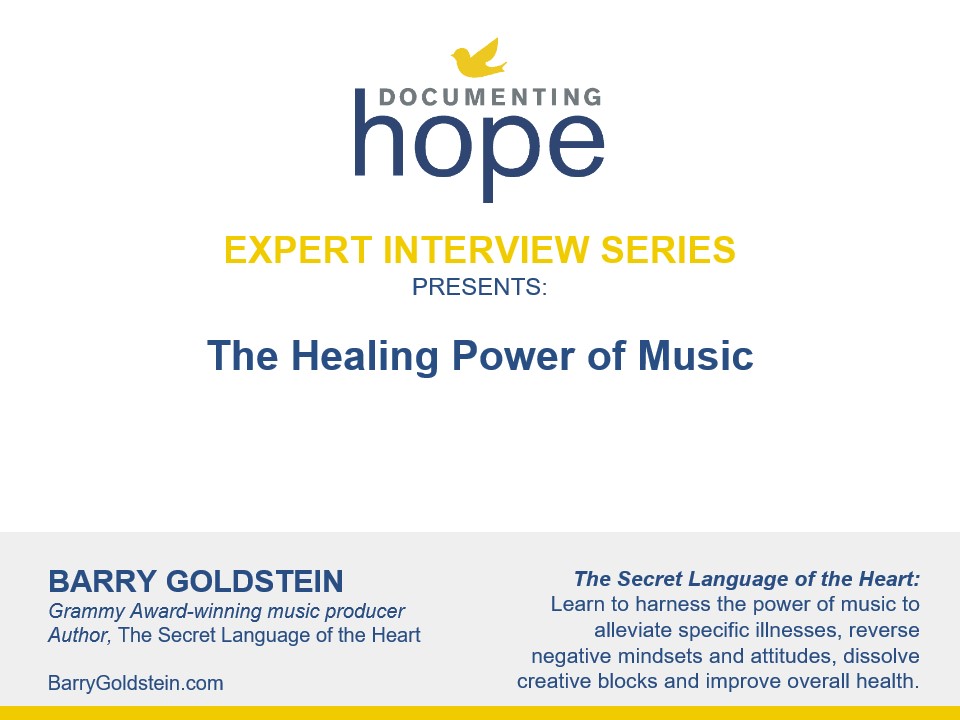
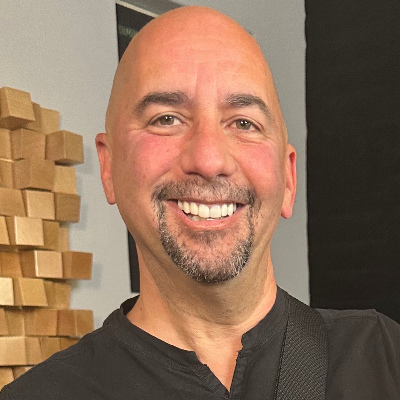
With over three decades of profound impact, Barry Goldstein stands at the intersection of music and healing as a visionary composer and sound expert. His Grammy Award-winning production and vibrational expertise bridge artistic expression and scientific innovation. Barry’s collaborations with industry luminaries such as Dr. Daniel Amen, Dr. Joe Dispenza, Dave Asprey, and other transformational leaders underscore his unique ability to harness music as a powerful tool for emotional and cognitive wellness.
In corporate workshops and healthcare facilities, Barry introduces ‘Acousticeuticals™,’ a term he coined to describe his innovative products that merge sound with health benefits to improve well-being, reduce stress, and foster productivity. His music is widely used in hospitals, hospices, and medical practices, and continues to be the focus of cutting-edge research into its health benefits.
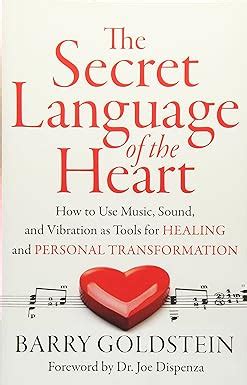
Barry is the author of The Secret Language of the Heart: How to Use Music, Sound, and Vibration as Tools for Healing and Personal Transformation.
Still Looking for Answers?
Visit the Documenting Hope Practitioner Directory to find a practitioner near you.
Join us inside our online membership community for parents, Healing Together, where you’ll find even more healing resources, expert guidance, and a community to support you every step of your child’s healing journey.
Sources & References
Amos, P. Rhythm and timing in autism: learning to dance. Front Integr Neurosci. 2013 Apr 19;7:27.
Barnhill, E. Neural connectivity, music, and movement: a response to Pat Amos. Front Integr Neurosci. 2013 Apr 24;7:29.
Chanda, M.L., et al. The neurochemistry of music. Trends Cogn Sci. 2013 Apr;17(4):179-93.
Chang, E.T., et al. The effects of music on the sleep quality of adults with chronic insomnia using evidence from polysomnographic and self-reported analysis: a randomized control trial. Int J Nurs Stud. 2012 Aug;49(8):921-30.
Gadberry, A.L. Steady beat and state anxiety. J Music Ther. 2011 Fall;48(3):346-56.
Garza-Villarreal, E.A., et al. Music reduces pain and increases functional mobility in fibromyalgia. Front Psychol. 2014 Feb 11:5:90.
Grape, C., et al. Does singing promote well-being?: An empirical study of professional and amateur singers during a singing lesson. Integr Physiol Behav Sci. 2003 Jan-Mar;38(1):65-74.
Hardy, M.W., et al. Rhythm, movement, and autism: using rhythmic rehabilitation research as a model for autism. Front Integr Neurosci. 2013 Mar 28;7:19.
Hilliard, R.E. The effects of music therapy on the quality and length of life of people diagnosed with terminal cancer. J Music Ther. 2003 Summer;40(2):113-37.
Hong, H.J., et al. Effect of Rhythmic Movement Program to Improve Walking Ability for Elderly Patients with Stroke. Indian Journal of Science and Technology. 2016 Jul;9(26).
Jungblut, M., et al. Paving the way for speech: voice-training-induced plasticity in chronic aphasia and apraxia of speech--three single cases. Neural Plast. 2014:2014:841982.
Kadivar, Z., et al. Effect of step training and rhythmic auditory stimulation on functional performance in Parkinson patients. Neurorehabil Neural Repair. 2011 Sep;25(7):626-35.
Katagiri, J. The effect of background music and song texts on the emotional understanding of children with autism. J Music Ther. 2009 Spring;46(1):15-31.
Khalfa, S., et al. Effects of relaxing music on salivary cortisol level after psychological stress. Ann N Y Acad Sci. 2003 Nov:999:374-6.
Klassen, J.A., et al. Music for pain and anxiety in children undergoing medical procedures: a systematic review of randomized controlled trials. Ambul Pediatr. 2008 Mar-Apr;8(2):117-28.
Kulkarni, S., et al. Music during interventional radiological procedures, effect on sedation, pain and anxiety: a randomised controlled trial. Br J Radiol. 2012 Aug;85(1016):1059-63.
Ladányi, K. et al. Is atypical rhythm a risk factor for developmental speech and language disorders? Wiley Interdiscip Rev Cogn Sci. 2020 Sep;11(5):e1528.
Lakatos, P., et al. A New Unifying Account of the Roles of Neuronal Entrainment. Curr Biol. 2019 Sep 23;29(18):R890-R905.
Lesiuk, T. The effect of preferred music on mood and performance in a high-cognitive demand occupation. J Music Ther. 2010 Summer;47(2):137-54.
Maack, C., et al. The Effects of Guided Imagery andMusic Therapy on Reported Change in Normal Adults. J Music Ther. 1999;36(1):39-55.
Nilsson, U. Soothing music can increase oxytocin levels during bed rest after open-heart surgery: a randomised control trial. J Clin Nurs. 2009 Aug;18(15):2153-61.
Salimpoor, V.N., et al. Anatomically distinct dopamine release during anticipation and experience of peak emotion to music. Nat Neurosci. 2011 Feb;14(2):257-62.
Shih, Y.N., et al. Background music: effects on attention performance. Work. 2012;42(4):573-8.
Silverman, M.J. The influence of music on the symptoms of psychosis: a meta-analysis. J Music Ther. 2003 Spring;40(1):27-40.
Simavli, S., et al. Effect of music on labor pain relief, anxiety level and postpartum analgesic requirement: a randomized controlled clinical trial. Gynecol Obstet Invest. 2014;78(4):244-50.
Suh, J.H., et al. Effect of rhythmic auditory stimulation on gait and balance in hemiplegic stroke patients. NeuroRehabilitation. 2014;34(1):193-9.
Trappe, H.J. The effects of music on the cardiovascular system and cardiovascular health. Heart. 2010 Dec;96(23):1868-71.
Van Hirtum, T., et al. Is atypical rhythm a riskfactor for developmental speech and language disorders? J Assoc Res Otolaryngol. 2021 Jul;22(4):465-480.
Wang, C.F., et al. Music therapy improves sleep quality in acute and chronic sleep disorders: a meta-analysis of 10 randomized studies. Int J Nurs Stud. 2014 Jan;51(1):51-62.
Wang, Z., et al. Music boosts the recovery of attention after mental fatigue in healthy young male subjects: A human auditory event-related potential study. Behav Brain Res. 2025 May 8:485:115539.
Whipple, J. Music in intervention for children and adolescents with autism: a meta-analysis. J Music Ther. 2004 Summer;41(2):90-106.
Winkler, I., et al. Newborn infants detect the beat in music. Proc Natl Acad Sci U S A. 2009 Feb 17;106(7):2468-71.
Zentner, M., et al. Rhythmic engagement with music in infancy. Proc Natl Acad Sci U S A. 2010 Mar 30;107(13):5768-73.
Resources
Books
Campbell, Dan. The Mozart Effect: Tapping the Power of Music to Heal the Body, Strengthen the Mind and Unlock the Creative Spirit. Quill, 2001.
Goldstein, Barry. The Secret Language of the Heart: How to Use Music, Sound, and Vibration as Tools for Healing and Personal Transformation. Hierophant Publishing, 2016.
Peretz, Isabelle and Zatorre, Robert. The Cognitive Neuroscience of Music. Oxford University Press, 2003.