We will be interviewing William Parker PhD, author of Tylenol and Autism: Evidence, Scientific Blunders, and Medicine Gone Wrong on Tuesday, November 17th, 2026 at 1:00pm Eastern. Sign up below to join us and ask Dr. Parker your own questions in this live interview!
What Is Acetaminophen (Tylenol)?
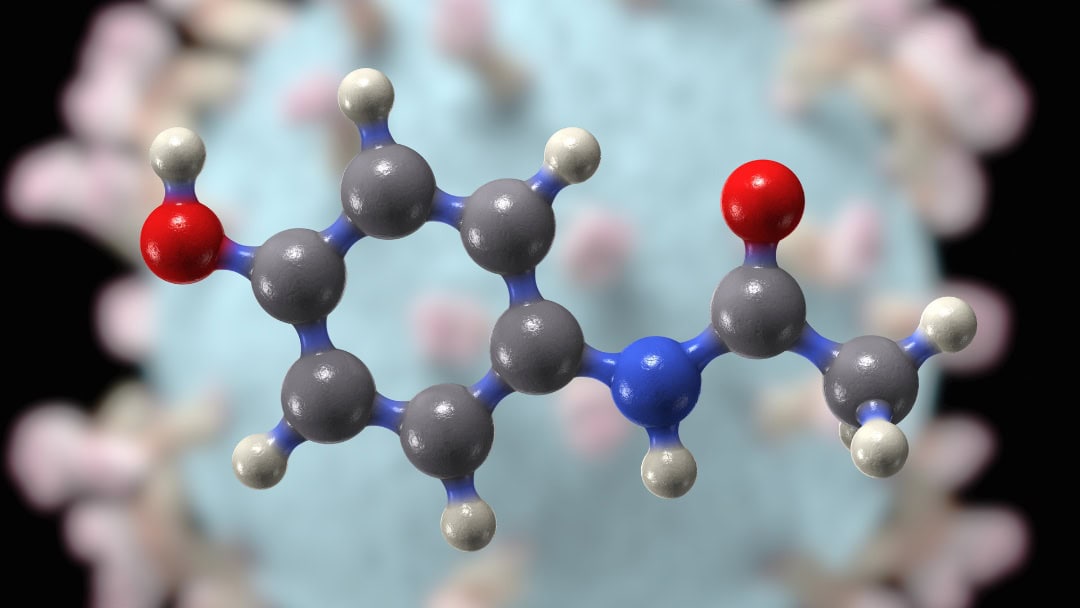
Acetaminophen, commonly known by the brand name Tylenol in the United States and paracetamol and other names outside the United States, is an over-the-counter pain-relief medication. It has been marketed as being safe and effective for decades and was most notably mareketed by Johnson & Johnson until the company sold off its remaining stake in Tylenol’s parent company, Kenvue, in August 2024.
The use of Tylenol increased in the pediatric population after the American Academy of Pediatrics issued guidelines in 1982 advising against the use of aspirin in children with viral illnesses such as chickenpox or flu because of the link between aspirin and Reye’s syndrome, a potentially fatal illness. As aspirin use in children fell after the Reye syndrome warnings, acetaminophen (Tylenol) became a common alternative for children’s fever and pain, alongside ibuprofen.
What Is Autism?
Autism is a psychoneuroimmunological collection of symptoms such as social and communication challenges, sensory-processing difficulties, perseverative behaviors and restricted interests. Because its rate has increased exponentially to now 1 in 22 children, it cannot be caused by genetics alone, as a genetic cause would remain at roughly the same percentage in the population.
Peer-review medical research (see the Sources & References in our article, What Is Autism, Really?) shows that what presents as autism is due to a multitude of root causes and stressors in a child whose “total-load” bucket is overfilled beyond the capacity of that child’s body. While there are often many biomedical stressors for these children, there is often a “straw that broke the camel’s back” such as a fever or toxin exposure that lead to a child’s regression into autism.
Is There Evidence of a Link Between Acetaminophen and Autism?
To our knowledge, William Shaw Phd, the founder of the Great Plains Laboratories (now known as Mosaic Diagnostics), raised the alarm in his July 2015 presentation entitled Increased Acetaminophen Use Appears to Be Major Cause of the Epidemics of Autism. In this presentation, he walks us through his thesis of how acetaminophen may be a major driver of the increase in autism rates. Other researchers followed, and many of them also concluded that acetaminophen can actually be harmful to the neurodevelopment of children (see Sources & References, below). William Parker PhD, is one of those researchers.
In This Expert Interview
In this interview, Dr. Parker will help us to answer the following questions:
- What is the history of acetaminophen and its connection to autism?
- Are there any compelling studies that link acetaminopen to autism?
- Are there false conclusions or scientific blunders drawn from any of these studies? If so, what are they?
- Is there a difference in risk to a child’s neurodevelopment from a pregnant mother taking acetaminophen to it being administered to a baby or child?
- Have any laboratory studies shown that acetaminophen is toxic to a child’s neurodevelopment?
- Could acetaminophen also contribute to ADHD, Sensory Processing Disorder or learning disabilities?
- Why is the medical community so reluctant to advise against the use of acetaminophen in children and pregnant women?
Sign up to join us in this live interview and ask Dr. Parker your own questions. Everyone who signs up will be emailed the replay the following day.
About William Parker Phd
Dr. Parker is Chief Executive Officer (CEO) at WPLab, and Visiting Scholar at UNC, Chapel Hill. He retired from Duke University after more than 27 years of research there. Best known for discovering the function of the human appendix, Dr. Parker studied biology and chemistry as an undergraduate student and went on to earn his Ph.D. in chemistry in 1992. He has been conducting scientific research since the 1980s and has published more than 140 peer-reviewed articles. His focus for the past two decades has been on factors that adversely affect immune function in high-income countries. These factors lay at the foundation of many health problems today, including allergic, autoimmune and neuropsychiatric conditions.
Dr. Parker is the author of Tylenol and Autism: Evidence, Scientific Blunders, and Medicine Gone Wrong, published in 2026. You can learn more about him and his work on his Google Scholar page and his website https://www.wplaboratory.org/

Still Looking for Answers?
Visit the Documenting Hope Practitioner Directory to find a practitioner near you.
Join us inside our online membership community for parents, Healing Together, where you’ll find even more healing resources, expert guidance, and a community to support you every step of your child’s healing journey.
Sources & References
Alemany, S., et al. Prenatal and postnatal exposure to acetaminophen in relation to autism spectrum and attention-deficit and hyperactivity symptoms in childhood: Meta-analysis in six European population-based cohorts. Eur J Epidemiol. 2021 Oct;36(10):993-1004.
Avella-Garcia, C.B., et al. Acetaminophen use in pregnancy and neurodevelopment: attention function and autism spectrum symptoms. Int J Epidemiol. 2016 Dec 1;45(6):1987-1996.
Baker, B.H., et al. Association of Prenatal Acetaminophen Exposure Measured in Meconium With Risk of Attention-Deficit/Hyperactivity Disorder Mediated by Frontoparietal Network Brain Connectivity. JAMA Pediatrics. 2020 Sep 28;e203080.
Bauer, A.Z., et al. Paracetamol use during pregnancy - a call for precautionary action. Nat Rev Endocrinol. 2021 Dec;17(12):757-766.
Bauer, A.Z., et al. Prenatal paracetamol exposure and child neurodevelopment: A review. Horm Behav. 2018 May:101:125-147.
Beasley, R.W., et al. Acetaminophen use and risk of asthma, rhinoconjunctivitis, and eczema in adolescents: International Study of Asthma and Allergies in Childhood Phase Three. Am J Respir Crit Care Med. 2011 Jan 15;183(2):171-8.
Bittker, S.S., et al. Postnatal Acetaminophen and Potential Risk of Autism Spectrum Disorder among Males. Behav Sci (Basel). 2020 Jan 1;10(1):26.
Cendejas-Hernandez, J., et al. Paracetamol (acetaminophen) use in infants and children was never shown to be safe for neurodevelopment: a systematic review with citation tracking. Eur J Pediatr. 2022 May;181(5):1835-1857.
Doran, T.F., et al. Acetaminophen: more harm than good for chickenpox? J Pediatr. 1989 Jun;114(6):1045-8.
Faucher, M.A. Acetaminophen In Pregnancy May Not Be As Safe As Previously Thought. J Midwifery Womens Health. 2014 Sep-Oct;59(5):541-2.
Good, P. Did acetaminophen provoke the autism epidemic? Altern Med Rev. 2009 Dec;14(4):364-72.
Homme, J.S., et al. Randomised controlled trial: Prophylactic paracetamol at the time of infant vaccination reduces the risk of fever but also reduces antibody response. Evid Based Med. 2010 Apr;15(2):50-1.
Ji, Y. Association of Cord Plasma Biomarkers of In Utero Acetaminophen Exposure With Risk of Attention-Deficit/Hyperactivity Disorder and Autism Spectrum Disorder in Childhood. JAMA Psychiatry. 2020 Feb 1;77(2):180-189.
Khan, F.Y., et al. A Systematic Review of the Link Between Autism Spectrum Disorder and Acetaminophen: A Mystery to Resolve. Cureus. 2022 Jul 18;14(7):e26995.
Kreiner-Møller, E., et al. Infant acetaminophen use associates with early asthmatic symptoms independently of respiratory tract infections: the Copenhagen Prospective Study on Asthma in Childhood 2000 (COPSAC(2000)) cohort. J Allergy Clin Immunol. 2012 Dec;130(6):1434-6.
Liew, Z., et al. Acetaminophen use during pregnancy, behavioral problems, and hyperkinetic disorders. JAMA Pediatr. 2014 Apr;168(4):313-20.
Liew, Z., et al. Maternal use of acetaminophen during pregnancy and risk of autism spectrum disorders in childhood: A Danish national birth cohort study. Autism Res. 2016 Sep;9(9):951-8.
Liew, Z., et al. Use of Negative Control Exposure Analysis to Evaluate Confounding: An Example of Acetaminophen Exposure and Attention-Deficit/Hyperactivity Disorder in Nurses' Health Study II. Am J Epidemiol. 2019 Apr 1;188(4):768-775.
Patel, E., et al. The safety of pediatric use of paracetamol (acetaminophen): a narrative review of direct and indirect evidence. Minerva Pediatr (Torino). 2022 Dec;74(6):774-788.
Parker, W., et al. The Dangers of Acetaminophen for Neurodevelopment Outweigh Scant Evidence for Long-Term Benefits. Children (Basel). 2023 Dec 29;11(1):44.
Phillipot, G., et al. Paracetamol (Acetaminophen) and its Effect on the Developing Mouse Brain. Front Toxicol. 2022 Mar 22:4:867748.
Prada, D., et al. Evaluation of the evidence on acetaminophen use and neurodevelopmental disorders using the Navigation Guide methodology. Environ Health. 2025 Aug 14;24(1):56.
Schultz, S.T., et al. Acetaminophen (paracetamol) use, measles-mumps-rubella vaccination, and autistic disorder: the results of a parent survey. Autism. 2008 May;12(3):293-307.
Schultz, S.T. Can autism be triggered by acetaminophen activation of the endocannabinoid system? Acta Neurobiol Exp (Wars). 2010;70(2):227-31.
Suda, N., et al. Therapeutic doses of acetaminophen with co-administration of cysteine and mannitol during early development result in long term behavioral changes in laboratory rats. PLoS One. 2021 Jun 25;16(6):e0253543.
Woodbury, M.L., et al. Examining the relationship of acetaminophen use during pregnancy with early language development in children. Pediatr Res. 2023 Dec 11.
Woodbury, M.L., et al. The relationship of prenatal acetaminophen exposure and attention-related behavior in early childhood. Neurotoxicol Teratol. 2024 Jan-Feb:101:107319.
Zhao, L., et al. Acetaminophen causes neurodevelopmental injury in susceptible babies and children: no valid rationale for controversy. Clin Exp Pediatr. 2024 Mar;67(3):126-139.