Conclusion: Many Cases of Autism Due to Postnatal Acetaminophen Usage
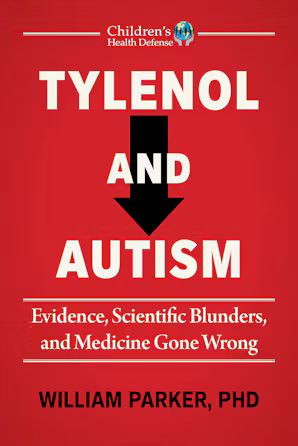
In this book, Dr. Parker focuses on the growing body of peer-reviewed scientific evidence (see Sources & References, below) that suggests a strong association between acetaminophen exposure (particularly around labor, delivery, and early childhood) and the risk of developing autism spectrum disorder in susceptible children, especially boys. He follows 30 different lines of evidence from different fields to corroborate this association. The book includes a full discussion of each of these lines of evidence as well as a summary table at the back of the book (for a handy reference guide). His conclusion is below:
“Conclusion: Many, if not most, cases of autism are a chemically-induced injury which occurs when babies and children with oxidative stress are given acetaminophen.”
The 30 lines of inquiry are divided into sections including:
- Pharmacologic evidence (6 lines)
- Associations involving time, place, or human behavior (12 lines)
- Laboratory animal studies (4 lines)
- Miscellaneous evidence (8 lines)
Some of the more compelling lines of evidence (to this reader, at least) are as follows.
Mechanisms of Toxicity and Susceptibility
In the book, Dr. Parker discusses the metabolic pathways and susceptibilities that influence how acetaminophen (often denoted by its chemical abbreviation APAP in the book) affects the brain, particularly in newborns and young children. Children with autism often have compromised pathways (such as the glucuronidation, sulfation, and cytochrome P450 oxidation pathways) for safely metabolizing acetaminophen, making them more vulnerable to its toxic intermediates. Glucuronidation isn’t functional until about two months of age and isn’t fully mature until about two years of age, leaving the youngest children highly vulnerable to Tylenol’s toxic effects. (Reminder here that children are not just adults in small bodies.) Children that cannot detoxify acetaminophen through these pathways produce a toxic byproduct known as NAPQI (N-acetyl-p-benzoquinone imine).
The Role of Oxidative Stress
Dr. Parker’s paper “The Role of Oxidative Stress, Inflammation and Acetaminophen Exposure from Birth to Early Childhood in the Induction of Autism“, discussed in the book, explored the role of oxidative stress as a common denominator in factors associated with autism. Oxidative stress depletes glutathione, which is necessary for detoxifying acetaminophen. Too much oxidative stress impairs the body’s ability to neutralize acetaminophen’s toxic byproducts and increases vulnerability to drug-induced neurodevelopmental damage, especially when combined with infections, common well-baby-visit medications, or other environmental exposures. Children with certain immune/metabolic vulnerabilities are both more prone to oxidative stress and less able to detoxify NAPQI, leaving them more susceptible to neurodevelopmental damage from Tylenol.
Time, Place or Human Behavior Associations
Dr. Parker explores the historical and geographic rise in autism rates in parallel with increases in acetaminophen use, policy changes, and drug marketing. He discusses spikes in autism cases following the switch from aspirin to Tylenol for children after the American Academy of Pediatrics issued guidelines in 1982 advising against the use of aspirin in children with viral illnesses because of the link between aspirin and Reye’s syndrome, which can potentially be fatal.
The first study that suggested that acetaminophen exposure in susceptible children might trigger autism was headed by Steven Schultz and published in 2008. It showed that if parents gave acetaminophen to their children between 12 and 18 months of age, the child had a 20 times greater likelihood of regression into autism.
He also digs into variations in autism rates that correspond to differences in acetaminophen use across regions or populations. One such compelling study compared the popularity of acetaminophen use and the prevalence of autism between Denmark and Finland. Denmark has a much higher use of acetaminophen and also has a higher rate of autism than Finland. While such an analysis does not prove causality, it does add to the total body of evidence.
Another example of geographic evidence is the case of Cuba, in which acetaminophen is available by prescription only. The rate of autism in Cuba is only 1 in 25,000, compared to 1 in 22 children in the United States (data published in Pediatrics, 2026). William Shaw PhD also used Cuba’s low autism rate and low acetaminophen usage in his 2015 video, Increased Acetaminophen Use Appears to Be Major Cause of the Epidemics of Autism.
Surprising Conclusion: Postnatal Usage Is More Harmful Than Prenatal Usage
Despite pronouncements from the Trump administration in 2025 saying that pregnant mothers should not take Tylenol, Dr. Parker shows plenty of evidence that it’s the Tylenol given to children up to the age of six years that does more neurodevelopmental harm than prenatal usage. The reason for this is that a fetus is somewhat protected by the mother’s liver.
Surprising Fact: Tylenol Has Never Been Tested for Neurodevelopmental Safety
While working at Duke University as a biochemical researcher, Dr. Parker co-authored “Paracetamol (Acetaminophen) Use in Infants and Children Was Never Shown to Be Safe for Neurodevelopment: A Systematic Review with Citation Tracking.” He and his fellow co-authors realized after tracking previous studies about acetaminophen that the thought that “Tylenol is safe” is based on opinion, not on evidence. In fact, the authors concluded that:
“Paracetamol is widely believed to be safe for infants and children when used as directed, despite mounting evidence in humans and in laboratory animals indicating that the drug is not safe for neurodevelopment.”
Scientific Errors
Parker asserts that “the big problem preventing most great scientists of our day from seeing a connection between acetaminophen and autism” is that “when it comes to acetaminophen, (scientists) have assumed that interacting varaiable are confounding factors.” He walks the reader through examples of how to understand this as well as examples of research papers that have made this error. “Scientists have missed the big picture and failed to recognize that (acetaminophen) interacts with oxidative stress to cause autism.” He notes that this error involves a lack of knowledge of pharmacology as well as statistical knowledge so that “the resulting math… is essentially answering the wrong question.” Thus, scientists who have made this error show that “standard statistical analyses find that the reason for giving the acetaminophen (such as a child being sick), or other factors related to oxidative stress, not the acetaminophen itself, is causing autism.”
According to Parker, the most egregious example of this error was made by a group at Drexel University in 2024 in the Journal of the American Medical Association (JAMA). “The paper confused confounding variables with interacting factors, erroneously concluded that no legitimate association between acetaminophen and autism exists” because “they essentially took sickness and oxidative stress out of the equation in all of their analyses.” Parker and his colleagues quickly covered the error in a publication. A 2025 Harvard paper correctly concluded that acetaminophen given to pregnant mothers could lead to neurodevelopmental disorders in their children, but ignored the error entirely.
“Oops, That Was Wrong” Scientific Blunders
In the book, Parker walks us through rebuttals of common errors in scientific thinking such as:
- “Acetaminophen has been used for so long and is used so much that if it really caused autism, we’d see autism universally by now.
- Correlation doesn’t equal causation, so therefore you can’t say acetaminophen causes autism.
- Blaming autism on one factor is oversimplifying a complex issue. A simple chemical alonge can’t explain something as multifactorial as autism.
- Studies in laboratory animals are not reliable and should not be used as a basis for any conclusions.
- Studies in siblings and twins prove that autism is genetic, so acetaminophen can’t cause autism.
- Fevers are associated with autism; therefore, fevers must be blocked.
- My child was never exposed to acetaminophen, and has autism; so acetaminophen doesn’t cause autism.”
Conclusion
Parker provides ample and compelling evidence to dissuade pregnant mothers and parents from using acetaminophen for their children. While the preponderance of evidence points to a likely causative role in the etiology of autism, we cannot wait for scientists to settle this argument among themselves so that they can finally say that acetaminophen is unsafe for pregnant mothers and young children. Instead, we recommend that parents read this book and then use the precautionary principle. We also recommend that parents consult with their healthcare practitioners in looking for alternatives to acetaminophen. If your child’s doctor is open to examining the evidence, we highly recommend that they read this book.
About William Parker Phd
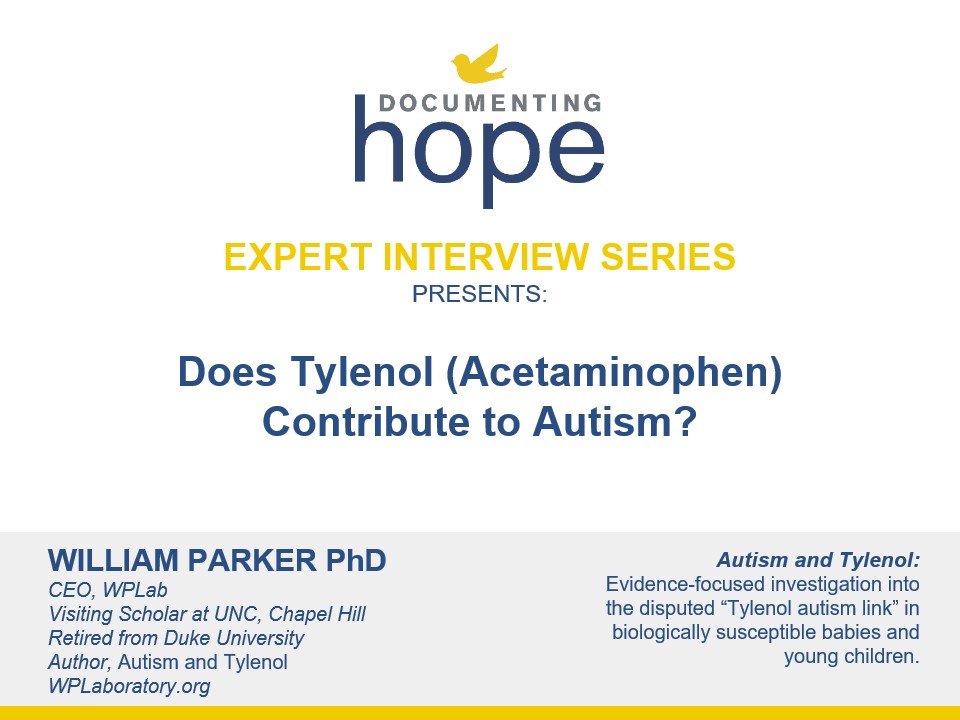
Dr. Parker is Chief Executive Officer (CEO) at WPLab, and Visiting Scholar at UNC, Chapel Hill. He retired from Duke University after more than 27 years of research there. Best known for discovering the function of the human appendix, Dr. Parker studied biology and chemistry as an undergraduate student and went on to earn his Ph.D. in chemistry in 1992. He has been conducting scientific research since the 1980s and has published more than 140 peer-reviewed articles. His focus for the past two decades has been on factors that adversely affect immune function in high-income countries. These factors lay at the foundation of many health problems today, including allergic, autoimmune and neuropsychiatric conditions.
Dr. Parker is the author of Tylenol and Autism: Evidence, Scientific Blunders, and Medicine Gone Wrong, published in 2026. You can learn more about him and his work on his Google Scholar page and his website https://www.wplaboratory.org/

Still Looking for Answers?
Visit the Documenting Hope Practitioner Directory to find a practitioner near you.
Join us inside our online membership community for parents, Healing Together, where you’ll find even more healing resources, expert guidance, and a community to support you every step of your child’s healing journey.
Sources & References
Alemany, S., et al. Prenatal and postnatal exposure to acetaminophen in relation to autism spectrum and attention-deficit and hyperactivity symptoms in childhood: Meta-analysis in six European population-based cohorts. Eur J Epidemiol. 2021 Oct;36(10):993-1004.
Avella-Garcia, C.B., et al. Acetaminophen use in pregnancy and neurodevelopment: attention function and autism spectrum symptoms. Int J Epidemiol. 2016 Dec 1;45(6):1987-1996.
Baker, B.H., et al. Association of Prenatal Acetaminophen Exposure Measured in Meconium With Risk of Attention-Deficit/Hyperactivity Disorder Mediated by Frontoparietal Network Brain Connectivity. JAMA Pediatrics. 2020 Sep 28;e203080.
Baker, B.H., et al. Sex-specific neurobehavioral and prefrontal cortex gene expression alterations following developmental acetaminophen exposure in mice. Neurobiol Dis. 2023 Feb:177:105970.
Bauer, A.Z., et al. Paracetamol use during pregnancy - a call for precautionary action. Nat Rev Endocrinol. 2021 Dec;17(12):757-766.
Bauer, A.Z., et al. Prenatal paracetamol exposure and child neurodevelopment: A review. Horm Behav. 2018 May:101:125-147.
Beasley, R.W., et al. Acetaminophen use and risk of asthma, rhinoconjunctivitis, and eczema in adolescents: International Study of Asthma and Allergies in Childhood Phase Three. Am J Respir Crit Care Med. 2011 Jan 15;183(2):171-8.
Bittker, S.S., et al. Postnatal Acetaminophen and Potential Risk of Autism Spectrum Disorder among Males. Behav Sci (Basel). 2020 Jan 1;10(1):26.
Blecharz-Klin, K., et al. Early paracetamol exposure decreases brain-derived neurotrophic factor (BDNF) in striatum and affects social behaviour and exploration in rats. Pharmacol Biochem Behav. 2018 May:168:25-32.
Bornehag, C.G., et al. Prenatal exposure to acetaminophen and children's language development at 30 months. Eur Psychiatry. 2018 Jun:51:98-103.
Brandlistuen, R.E., et al. Prenatal paracetamol exposure and child neurodevelopment: a sibling-controlled cohort study. Int J Epidemiol. 2013 Dec;42(6):1702-13.
Cendejas-Hernandez, J., et al. Paracetamol (acetaminophen) use in infants and children was never shown to be safe for neurodevelopment: a systematic review with citation tracking. Eur J Pediatr. 2022 May;181(5):1835-1857.
Chen, M.H., et al. Prenatal Exposure to Acetaminophen and the Risk of Attention-Deficit/Hyperactivity Disorder: A Nationwide Study in Taiwan. J Clin Psychiatry. 2019 Sep 10;80(5):18m12612.
Chopyk, D.M., et al. Acetaminophen Intoxication Rapidly Induces Apoptosis of Intestinal Crypt Stem Cells and Enhances Intestinal Permeability. Hepatol Commun. 2019 Jul 15;3(11):1435-1449.
Cook, S.F., et al. Neonatal Maturation of Paracetamol (Acetaminophen) Glucuronidation, Sulfation, and Oxidation Based on a Parent-Metabolite Population Pharmacokinetic Model. Clin Pharmacokinet. 2016 Nov;55(11):1395-1411.
Dewall, C.N., et al. Acetaminophen reduces social pain: behavioral and neural evidence. Psychol Sci. 2010 Jul;21(7):931-7.
Doran, T.F., et al. Acetaminophen: more harm than good for chickenpox? J Pediatr. 1989 Jun;114(6):1045-8.
Durso, G.R.O., et al. Over-the-Counter Relief From Pains and Pleasures Alike: Acetaminophen Blunts Evaluation Sensitivity to Both Negative and Positive Stimuli. Psychol Sci. 2015 Jun;26(6):750-8.
Faucher, M.A. Acetaminophen In Pregnancy May Not Be As Safe As Previously Thought. J Midwifery Womens Health. 2014 Sep-Oct;59(5):541-2.
Golding, J., et al. Associations between paracetamol (acetaminophen) intake between 18 and 32 weeks gestation and neurocognitive outcomes in the child: A longitudinal cohort study. Paediatr Perinat Epidemiol. 2020 May;34(3):257-266.
Good, P. Did acetaminophen provoke the autism epidemic? Altern Med Rev. 2009 Dec;14(4):364-72.
Good, P. Evidence the U.S. autism epidemic initiated by acetaminophen (Tylenol) is aggravated by oral antibiotic amoxicillin/clavulanate (Augmentin) and now exponentially by herbicide glyphosate (Roundup). Clin Nutr ESPEN. 2018 Feb:23:171-183.
Graeca, M., et al. Impaired brainstem auditory evoked potentials after in utero exposure to high dose paracetamol exposure. Hear Res. 2024 Dec:454:109149.
Green, M.D., et al. Hepatotoxicity of acetaminophen in neonatal and young rats. I. Age-related changes in susceptibility. Toxicol Appl Pharmacol. 1984 Jun 15;74(1):116-24.
Hay-Schmidt, A., et al. Prenatal exposure to paracetamol/acetaminophen and precursor aniline impairs masculinisation of male brain and behaviour. Reproduction. 2017 Aug;154(2):145-152.
Homme, J.S., et al. Randomised controlled trial: Prophylactic paracetamol at the time of infant vaccination reduces the risk of fever but also reduces antibody response. Evid Based Med. 2010 Apr;15(2):50-1.
Inoue, K., et al. Behavioral Problems at Age 11 Years After Prenatal and Postnatal Exposure to Acetaminophen: Parent-Reported and Self-Reported Outcomes. Am J Epidemiol. 2021 Jun 1;190(6):1009-1020.
Ji, Y. Association of Cord Plasma Biomarkers of In Utero Acetaminophen Exposure With Risk of Attention-Deficit/Hyperactivity Disorder and Autism Spectrum Disorder in Childhood. JAMA Psychiatry. 2020 Feb 1;77(2):180-189.
Jones III, J.P., et al. Evaluating the Role of Susceptibility Inducing Cofactors and of Acetaminophen in the Etiology of Autism Spectrum Disorder. Life (Basel). 2024 Jul 23;14(8):918.
Kanno, S.I., et al. Glutathione peroxidase 3 is a protective factor against acetaminophen‑induced hepatotoxicity in vivo and in vitro. Int J Mol Med. 2017 Sep;40(3):748-754.
Khan, F.Y., et al. A Systematic Review of the Link Between Autism Spectrum Disorder and Acetaminophen: A Mystery to Resolve. Cureus. 2022 Jul 18;14(7):e26995.
Klein, R.M., et al. Gestational exposure to paracetamol in rats induces neurofunctional alterations in the progeny. Neurotoxicol Teratol. 2020 Jan-Feb:77:106838.
Kreiner-Møller, E., et al. Infant acetaminophen use associates with early asthmatic symptoms independently of respiratory tract infections: the Copenhagen Prospective Study on Asthma in Childhood 2000 (COPSAC(2000)) cohort. J Allergy Clin Immunol. 2012 Dec;130(6):1434-6.
Liew, Z., et al. Acetaminophen use during pregnancy, behavioral problems, and hyperkinetic disorders. JAMA Pediatr. 2014 Apr;168(4):313-20.
Liew, Z., et al. Maternal use of acetaminophen during pregnancy and risk of autism spectrum disorders in childhood: A Danish national birth cohort study. Autism Res. 2016 Sep;9(9):951-8.
Liew, Z., et al. Paracetamol use during pregnancy and attention and executive function in offspring at age 5 years. Int J Epidemiol. 2016 Dec 1;45(6):2009-2017.
Liew, Z., et al. Prenatal Use of Acetaminophen and Child IQ: A Danish Cohort Study. Epidemiology. 2016 Nov;27(6):912-8.
Liew, Z., et al. Use of Negative Control Exposure Analysis to Evaluate Confounding: An Example of Acetaminophen Exposure and Attention-Deficit/Hyperactivity Disorder in Nurses' Health Study II. Am J Epidemiol. 2019 Apr 1;188(4):768-775.
McCrae, J.C., et al. Long-term adverse effects of paracetamol - a review. Br J Clin Pharmacol. 2018 Oct;84(10):2218-2230.
Miller, R.P., et al. Acetaminophen elimination kinetics in neonates, children, and adults. Clin Pharmacol Ther. 1976 Mar;19(3):284-94.
Parker, S.E., et al. Maternal acetaminophen use during pregnancy and childhood behavioural problems: Discrepancies between mother- and teacher-reported outcomes. Paediatr Perinat Epidemiol. 2020 May;34(3):299-308.
Parker, W., et al. Evidence that acetaminophen triggers autism in susceptible individuals has been ignored and mishandled for more than a decade. Journal of the Academy of Public Health. 26 Oct 2025.
Parker, W., et al. The Dangers of Acetaminophen for Neurodevelopment Outweigh Scant Evidence for Long-Term Benefits. Children (Basel). 2023 Dec 29;11(1):44.
Parker, W., et al. The role of oxidative stress, inflammation and acetaminophen exposure from birth to early childhood in the induction of autism. J Int Med Res. 2017 Apr;45(2):407-438.
Patel, E., et al. The safety of pediatric use of paracetamol (acetaminophen): a narrative review of direct and indirect evidence. Minerva Pediatr (Torino). 2022 Dec;74(6):774-788.
Philippot, G., et al. Adult neurobehavioral alterations in male and female mice following developmental exposure to paracetamol (acetaminophen): characterization of a critical period. J Appl Toxicol. 2017 Oct;37(10):1174-1181.
Philippot, G., et al. Paracetamol (Acetaminophen) and its Effect on the Developing Mouse Brain. Front Toxicol. 2022 Mar 22:4:867748.
Posadas, I., et al. Acetaminophen induces apoptosis in rat cortical neurons. PLoS One. 2010 Dec 10;5(12):e15360.
Prada, D., et al. Evaluation of the evidence on acetaminophen use and neurodevelopmental disorders using the Navigation Guide methodology. Environ Health. 2025 Aug 14;24(1):56.
Rigobello, C., et al. Perinatal exposure to paracetamol: Dose and sex-dependent effects in behaviour and brain's oxidative stress markers in progeny. Behav Brain Res. 2021 Jun 25:408:113294.
Roberts, I.D., et al. Acetaminophen influences social and economic trust. Sci Rep. 2019 Mar 11;9(1):4060.
Saad, A., et al. Is There a Causal Relation between Maternal Acetaminophen Administration and ADHD? PLoS One. 2016 Jun 13;11(6):e0157380.
Schultz, S., et al. Effects of the analgesic acetaminophen (Paracetamol) and its para-aminophenol metabolite on viability of mouse-cultured cortical neurons. Basic Clin Pharmacol Toxicol. 2012 Feb;110(2):141-4.
Schultz, S.T., et al. Acetaminophen (paracetamol) use, measles-mumps-rubella vaccination, and autistic disorder: the results of a parent survey. Autism. 2008 May;12(3):293-307.
Schultz, S.T. Can autism be triggered by acetaminophen activation of the endocannabinoid system? Acta Neurobiol Exp (Wars). 2010;70(2):227-31.
Shaw, W. Evidence That Increased Acetaminophen Use in Genetically Vulnerable Children Appears to Be a Major Cause of the Epidemics of Autism, Attention Deficit with Hyperactivity, and Asthma. Journal of Restorative Medicine, Volume 2, Number 1, 10 January 2013, pp. 14-29(16).
Shaw, W. Hypothesis: 2 Major Environmental and Pharmaceutical Factors-Acetaminophen Exposure and Gastrointestinal Overgrowth of Clostridia Bacteria Induced By Ingestion of Glyphosate-Contaminated Foods-Dysregulate the Developmental Protein Sonic Hedgehog and Are Major Causes of Autism. Integr Med (Encinitas). 2024 Jul;23(3):12-23.
Stergiakouli, E., et al. Association of Acetaminophen Use During Pregnancy With Behavioral Problems in Childhood: Evidence Against Confounding. JAMA Pediatr. 2016 Oct 1;170(10):964-970.
Suda, N., et al. Therapeutic doses of acetaminophen with co-administration of cysteine and mannitol during early development result in long term behavioral changes in laboratory rats. PLoS One. 2021 Jun 25;16(6):e0253543.
Sznajder, K.K., et al. Maternal use of acetaminophen during pregnancy and neurobehavioral problems in offspring at 3 years: A prospective cohort study. PLoS One. 2022 Sep 28;17(9):e0272593.
Thompson, J.M.D., et al. Associations between acetaminophen use during pregnancy and ADHD symptoms measured at ages 7 and 11 years. PLoS One. 2014 Sep 24;9(9):e108210.
Tovo-Rodrigues, L., et al. Is intrauterine exposure to acetaminophen associated with emotional and hyperactivity problems during childhood? Findings from the 2004 Pelotas birth cohort. BMC Psychiatry. 2018 Nov 20;18(1):368.
Trønnes, J.N., et al. Prenatal paracetamol exposure and neurodevelopmental outcomes in preschool-aged children. Paediatr Perinat Epidemiol. 2020 May;34(3):247-256.
Viberg, H., et al. Paracetamol (acetaminophen) administration during neonatal brain development affects cognitive function and alters its analgesic and anxiolytic response in adult male mice. Toxicol Sci. 2014 Mar;138(1):139-47.
Vigo, M.B., et al. Acute acetaminophen intoxication induces direct neurotoxicity in rats manifested as astrogliosis and decreased dopaminergic markers in brain areas associated with locomotor regulation. Biochem Pharmacol. 2019 Dec:170:113662.
Vlenterie, R., et al. Neurodevelopmental problems at 18 months among children exposed to paracetamol in utero: a propensity score matched cohort study. Int J Epidemiol. 2016 Dec 1;45(6):1998-2008.
Woodbury, M.L., et al. Examining the relationship of acetaminophen use during pregnancy with early language development in children. Pediatr Res. 2023 Dec 11.
Woodbury, M.L., et al. The relationship of prenatal acetaminophen exposure and attention-related behavior in early childhood. Neurotoxicol Teratol. 2024 Jan-Feb:101:107319.
Ystrom, E., et al. Prenatal Exposure to Acetaminophen and Risk of ADHD. Pediatrics. 2017 Nov;140(5):e20163840.
Zhao, L., et al. Acetaminophen causes neurodevelopmental injury in susceptible babies and children: no valid rationale for controversy. Clin Exp Pediatr. 2024 Mar;67(3):126-139.
Resources
Books
Parker, William. Tylenol and Autism: Evidence, Scientific Blunders, and Medicine Gone Wrong. Childrens Health Defense Books. 23 Jun 2026.
Videos
Shaw, William. Increased Acetaminophen Use Appears to Be Major Cause of the Epidemics of Autism. YouTube. 17 Jul 2015.
WPLaboratory. Acetaminophen and Autism : Evidence, Scientific Blunders, and Medicine Gone Wrong | Nov 2026. YouTube. 3 Nov 2026.
Websites