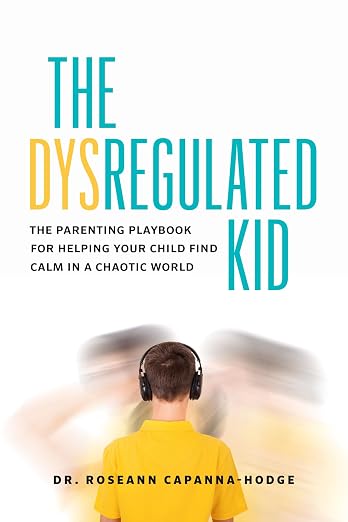
We interviewed Roseann Capanna-Hodge EdD LPC BCN about her new book, The Dysregulated Kid. You can watch the replay below. Please note that you will be asked to provide your email address at the 30-minute mark to continue viewing the replay.
What Is Dysregulation?
Dysregulation refers to nervous-system dysregulation, an all-too-common state that many of today’s children are in. This state can also be called “fight, flight or freeze” as well as sympathetic nervous system dominance. It can come about from a number of root causes that affect the nervous system such as birth trauma, modern living practices, and insults that injure the nervous system, which can then contribute to symptoms such as anxiety, constipation, headaches, gastrointestinal disorders, and retained reflexes.
It’s important to understand your child’s behaviors as communication. A child typically does not have the depth of knowledge or experience to be able to say to a parent that they are upset, nervous or anxious, so they may act out in other ways such as tantrums.
What Is Co-Regulation?
Co-regulation means that a child relies on a parent’s nervous-system regulation to keep themselves regulated. A child is more likely to be calm and present if their parent is. Co-regulation supports emotional safety in children and fosters secure attachment bonds between parents and children. By taking care of their own nervous system, a parent can help their child be calm.
In This Expert Interview
In this interview, Dr. Roseann helped us to answer the following questions:
- What is nervous-system dysregulation?
- Are clinical diagnoses sometimes just nervous-system dysregulation in disguise?
- What are signs of an over- or under-stimulated nervous system?
- What is co-regulation?
- Why does a child often need to have parents with regulated nervous-systems in order to feel safe and calm?
- What are steps that a parent or caregiver can take to help their child feel safe and calm?
- What is the CALMS dysregulation protocol?
- What does a self-regulated child look like?
- What are the benefits to a child of having a regulated nervous system?
- Are there tools other than pharmaceuticals that a child can use to create coping skills and to build stress tolerance?
Key Discussions
Nervous-System Regulation as the Foundation for Healing
Regulating the nervous system for both parents and children is the foundation for healing from any condition, including behavioral challenges and mental health issues. All other therapies and interventions work more effectively when nervous-system regulation is prioritized and practiced in daily micro-moments.
The “Stress Cup” and Cumulative Stressors
Dr. Roseann uses the metaphor of a “stress cup” to describe how various stressors that are big and small, physical and emotional, accumulate in children, especially those who are neurodivergent or have chronic health challenges. These accumulated stressors eventually lead the nervous system to overflow, resulting in dysregulation.
Co-Regulation and the Role of Parents
Parents act as external regulators for their children’s nervous systems. Through modeling calm and using conscious regulation techniques themselves, parents create an environment for children to learn self-regulation. This is often called coregulation, and parents’ own state directly influences their child’s state
Practical, Accessible Strategies for Regulation
Simple, free, and consistent regulation strategies (such as diaphragmatic breathing, “love pauses,” heart hugs, or using somatic techniques) can be integrated into daily routines. These micro-practices, done multiple times a day, retrain the brain and nervous system, creating lasting positive change
The Importance of Community, Support, and Modeling Positive Change
Experiences of parental isolation, stigma, and judgment are common for families struggling with dysregulation. Building supportive communities and modeling positive behavior, including forgiveness and boundary-setting, are important for both parent and child well-being.
Timestamped Overview
00:00 New autism and ADHD rates
05:33 Writing a child psychology book
15:07 Mom’s powerful and loving nature
16:10 Discussing challenges for neurodivergent kids
26:15 Understanding fight, flight, freeze and fawn responses
27:49 Parental concerns about child’s school experience
37:26 Understanding and managing sensitivity
40:59 Describing family dynamics
44:44 Future training and data usage
51:46 Practicing mindful breathing techniques
55:01 Importance of regulation in therapy
01:00:54 Supporting kids with chronic health conditions
01:06:42 Guiding patients on medication management
01:17:48 Evaluating advice and taking action
01:25:11 Overcoming trauma and building trust
01:29:11 Responding to a skeptic online
01:37:08 Health coaching and resource access
01:40:44 Biofeedback and brain rewiring
01:43:29 Balancing alpha waves
01:50:50 Growing up with early tech
01:56:00 Benefits of staying regulated
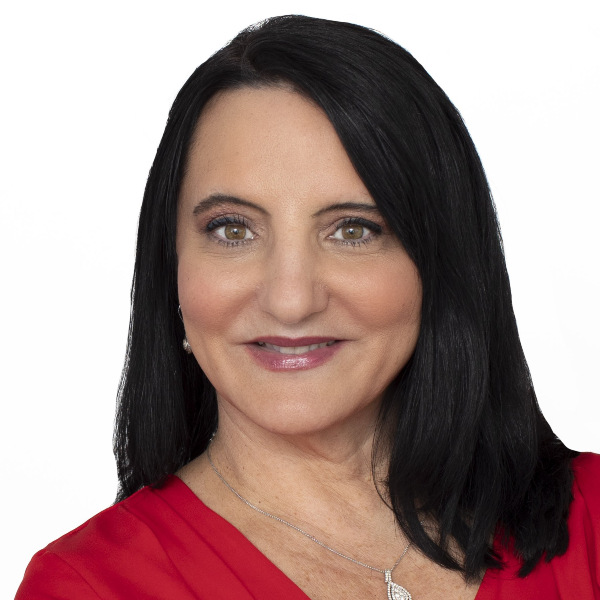
About Roseann Capanna-Hodge EdD LPC BCN
Dr. Roseann is a trailblazing psychologist, pediatric mental health expert and the founder and director of The Global Institute of Children’s Mental Health and Dr. Roseann and Associates. Her Connecticut-based center has helped thousands of children and adults reverse the most challenging conditions such as ADHD, autism, anxiety, depression, concussion, learning disability, Lyme disease, and PANS/PANDAS.
Dr. Roseann treats these conditions using proven holistic therapies such as neurofeedback, biofeedback, psychotherapy, and nutrition using her trademarked intensive two-week intensive 360 Reboot™ Program. Her mission is to teach parents how to reduce and reverse their child’s symptoms using proven natural therapies and her book, “It’s Gonna be OK!™, and course, The Get Unstuck Program™: The Step by Step Way to Change Your Child’s Mental Health, give parents the tools for lasting change.
She is also the author of The Dysregulated Kid: The Parenting Playbook for Helping Your Child Find Calm in a Chaotic World, Teletherapy Toolkit™: Therapist Handbook for Treating Children and Teens, and co-author of the best-selling book Brain Under Attack: A Resource For Parents and Caregivers of Children With PANS, PANDAS, and Autoimmune Encephalitis. She has been featured on dozens of media outlets such as The Mel Robbins Show, Fox News, CBS, NBC, PIX11 NYC, Cheddar TV, FORBES, USA Today, Yahoo News, WebMD, Business Insider, PARENTS, The Week, and The New York Times.
Dr. Roseann is a Connecticut certified school psychologist, a Licensed Professional Counselor (LPC), Certified Integrative Medicine Mental Health Provider (CMHIMP), and a Board Certified Neurofeedback Provider (BCN). Dr. Roseann serves on the boards of the Northeast Regional Biofeedback Society and is a Lyme Connection Task Force Professional Advisor.
Disclaimer
This expert interview is not a substitute for medical advice, treatment, diagnosis, or consultation with a medical professional. It is intended for general informational purposes only and should not be relied on to make determinations related to treatment of a medical condition. Documenting Hope has not verified and does not guaranty the accuracy of the information provided in this expert interview.
Still Looking for Answers?
Visit the Documenting Hope Practitioner Directory to find a practitioner near you.
Join us inside our online membership community for parents, Healing Together, where you’ll find even more healing resources, expert guidance, and a community to support you every step of your child’s healing journey.
Sources & References
Aggarwal, A., et al. Predominant symptoms in irritable bowel syndrome correlate with specific autonomic nervous system abnormalities. Gastroenterology. 1994 Apr;106(4):945-50.
Altomare, D.F., et al. Slow-transit constipation: solitary symptom of a systemic gastrointestinal disease. Dis Colon Rectum. 1999 Feb;42(2):231-40.
Browning, K.N. et al. Central nervous system control of gastrointestinal motility and secretion and modulation of gastrointestinal functions. Compr Physiol. 2014 Oct;4(4):1339-68.
Campos, J.O., et al. Cardiac autonomic dysfunction in school age children with overweight and obesity. Nutr Metab Cardiovasc Dis. 2022 Oct;32(10):2410-2417.
Chuang, H.H., et al. Weight Status, Autonomic Function, and Systemic Inflammation in Children with Obstructive Sleep Apnea. Int J Mol Sci. 2024 Aug 16;25(16):8951.
Gitler, A., et al. Harnessing non‑invasive vagal neuromodulation: HRV biofeedback and SSP for cardiovascular and autonomic regulation (Review). Med Int (Lond). 2025 Apr 29;5(4):37.
Gullett, N., et al. Heart rate variability (HRV) as a way to understand associations between the autonomic nervous system (ANS) and affective states: A critical review of the literature. Int J Psychophysiol. 2023 Oct:192:35-42.
Karrow, N.A. Activation of the hypothalamic-pituitary-adrenal axis and autonomic nervous system during inflammation and altered programming of the neuroendocrine-immune axis during fetal and neonatal development: lessons learned from the model inflammagen, lipopolysaccharide. Brain Behav Immun. 2006 Mar;20(2):144-58.
Knowles, C.H., et al. Sensory and autonomic neuropathy in patients with idiopathic slow-transit constipation. Br J Surg. 1999 Jan;86(1):54-60.
Knowles, C.H., et al. Slow transit constipation: a disorder of pelvic autonomic nerves? Dig Dis Sci. 2001 Feb;46(2):389-401.
Liu, L., et al. Diagnosis of colonic dysmotility associated with autonomic dysfunction in patients with chronic refractory constipation. Sci Rep. 2022 Jul 14;12(1):12051.
Mazure, M., et al. Autonomic nervous system activity in constipation-predominant irritable bowel syndrome patients. Med Sci Monit. 2012 Aug;18(8):CR493-499.
Michels, N., et al. Gut microbiome patterns depending on children's psychosocial stress: Reports versus biomarkers. Brain Behav Immun. 2019 Aug:80:751-762.
Mizuno, K., et al. Hydrogen-rich water for improvements of mood, anxiety, and autonomic nerve function in daily life. Med Gas Res. 2018 Jan 22;7(4):247-255.
Perrin, C., et al. Transcutaneous Auricular Vagus Nerve Stimulation during Movement Selectively Activates Motor Circuitry without Additional Cortical or Autonomic Effects. J Neurosci. 2026 Jun 24;46(25):e2251252026.
Porges, S.W., et al. Autonomic regulation of preterm infants is enhanced by Family Nurture Intervention. Dev Psychobiol. 2019 Sep;61(6):942-952.
Porges, S.W. Love: an emergent property of the mammalian autonomic nervous system. Psychoneuroendocrinology. 1998 Nov;23(8):837-61.
Raine, A. Autonomic nervous system factors underlying disinhibited, antisocial, and violent behavior. Biosocial perspectives and treatment implications. Ann N Y Acad Sci. 1996 Sep 20:794:46-59.
Speer, K.E., et al. Lifestyle Modification for Enhancing Autonomic Cardiac Regulation in Children: The Role of Exercise. Children (Basel). 2019 Nov 16;6(11):127.