The History of Infrared Healing in Children with Autism
In the 1990s infrared sauna companies popped up all over the United States, as a genuine interest in detoxification from environmental toxins became a “hot” topic. Environmental medicine was on the forefront as autoimmune diseases and disorders skyrocketed throughout the American population.
One of the key factors that is so attractive about an infrared sauna is that it can be a safe and non-invasive way to detoxify from heavy metal toxicity. Detoxification with infrared became one of the greatest tools of the decade because it was safe, easy, and an affordable option that could be done at home simply by having the body sweat out the toxins through the skin.
These newly marketed saunas became the “soup du jour” in the autism arena. At that time, DAN physicians (Defeat Autism Now) were on the rise as the collective gathering of the greatest minds and intellect at that time working together to understand how to effectively approach and manage autism which was rapidly exploding in the early 1990s. In the 1980s, only one in 10,000 children were diagnosed with autism. By the 1990s, that number grew exponentially to one in 1,000. DAN’s famous “Think Tank” meetings began to examine various underlying factors such as a lowered immune response, exposure to environmental toxins and the impact of diet on children at that time. DAN doctors understood that detoxification of heavy metals was a way for children with autism to heal their brains; the question became how to do that safely.
To understand how forward-thinking detoxification was for the autism arena at that time, it is necessary to see the backdrop of Western medicine at the onset of autism and what options parents were given. As a band aid solution to calm down the inappropriate behaviors found in these children, Western medicine offered medications, and many of these medications were for schizophrenia. In certain cases, this type of solution may be necessary. However, because these drugs did not address the underlying causes of autism, many parents and DAN physicians were looking for effective biomedical solutions that would change long-term outcomes by improving the child’s immune system even though the time frame would be unknown and most likely lengthy. Infrared healing, therefore, became an important solution in this detoxification process for children with autism to help parents and doctors address underlying causes.
Infrared Sauna as a Healing Therapy
For autism parents, the infrared sauna was a much-less-invasive way to detoxify a child who was unable to sit and do IVs or tolerate patches on the skin or endure other invasive detoxification methods of the time. In the autism arena, sensory therapies, educational methodologies and Applied Behavioral Analysis (ABA) were the only available alternative options back in the initial days of the early 1990s.
As the onset of biomedical treatments began to explode, the infrared sauna became the latest and greatest modality for healing, and it was a game changer for many children. Autism parents were considering infrared healing not only for the detoxification abilities but also because it was a non-invasive therapy, which was a very important factor to parents whose children were not easy to manage or at best non-cooperative.
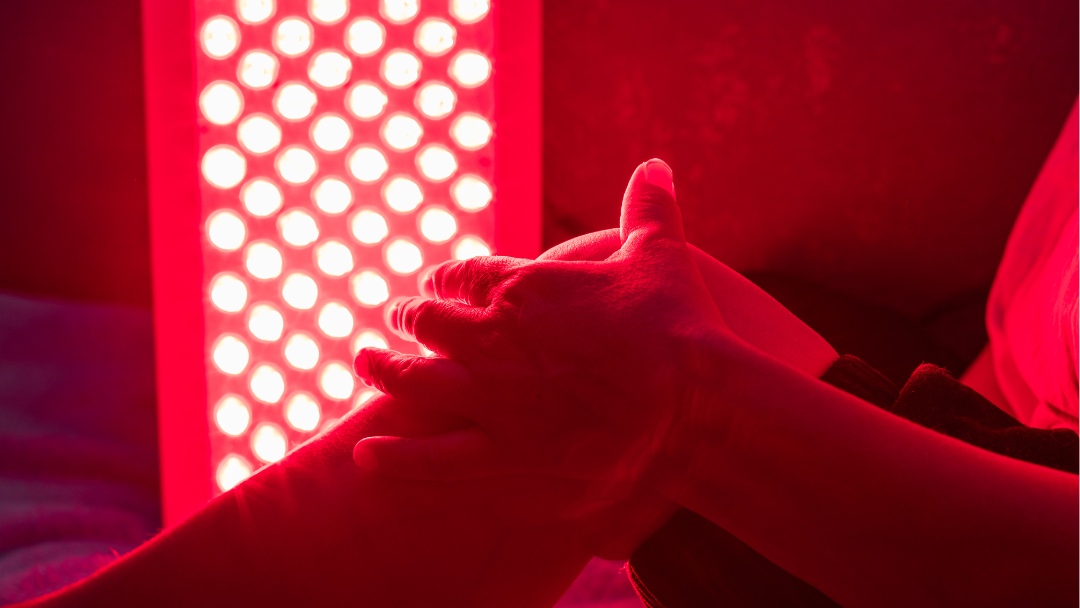
Over time, infrared healing has evolved over the years, and new methodologies of application have emerged, but this therapeutic modality has always maintained its ability to detoxify and to heal. Autism is just one example of how effective infrared therapy has been for this arena, but anyone and everyone can benefit from these healing waves. One method of infrared healing that is not just a quick and easy fad is photobiomodulation (PBM).
Why Photobiomodulation?
PBM supports brain health by:
- Reducing inflammation
- Decreasing oxidative stress
- Increasing circulation
- Improving better blood flow to the brain
- Modulating natural brain wave patterns
- Increases mitochondrial functioning
These mechanisms of action help nerve cells function and communicate with each other as effectively as possible.
We also can’t forget that PBM increases function of mitochondria, which are the major source of energy for the body’s cells. If healing is going to take place, then we need to make sure our mitochondria are functioning at an optimum level and providing all the cells in the body the energy needed to ensure all enzymatic functioning that the body requires. This is why the mitochondria are known as the powerhouses of the body. They regulate metabolism and provide continual energy so both our bodies and brain can function to full capacity.
By stimulating and supporting our mitochondria, PBM has the possibility to improve:
- Mood
- Focus
- Concentration
- Memory
- Processing of information
- Perception
- Learning capacity
- Problem-solving capabilities
- Decision-making capabilities
- Sleep
- Ability to manage stress
PBM Can Increase Serotonin
Another important function of PBM is the ability of increase serotonin. Serotonin is one of the catecholamine hormones and neurotransmitters. Catecholamines are responsible for the fight-or-flight response to stress with which almost every person today struggles. Serotonin helps regulate mood, sleep, digestion and appetite. Ninety percent of serotonin is found in the gastrointestinal tract, which is why diet has an integral connection to the production of serotonin. B vitamins, folate, fiber, magnesium, polyphenols, antioxidants and a healthy microbiome all contribute the production of serotonin in the body.
Low serotonin can be an underlying factor in mental health symptoms of anxiety and depression. Serotonin is crucial for optimum brain functioning, social development and adaptive behaviors which are the fundamental skills a child would need to have to function independently in daily living. Therefore, finding a way to increase serotonin – especially in children with autism – would add tremendous value to these children’s lives. Could PBM be a solution?
PBM Helmet
In my opinion, the most interesting and unique type of PBM is the PBM helmet. On one hand, a helmet seems like it could be overwhelming, but on the other hand how perfect is this for children with autism because it focuses on enhancing the brain. However, it should be noted that the helmet is not just exclusive to children with autism. It can potentially improve brain function for almost any kind of neurodevelopmental disorder or neurological condition.
One man with whom I spoke had major brain cancer surgery, and he decided not to do chemotherapy and radiation as his doctors suggested. Instead, he bought the PBM helmet. He continues to use the PBM helmet every day to heal his brain and has extended his life to over a year, beyond the three months his physicians projected he would have lived. Please note that a PBM helmet is not an endorsement or recommendation by Documenting Hope for the treatment of cancer.
The PBM helmet may also be helpful for individuals with:
- Concussion recovery
- Brain fog
- Cognitive decline
- Parkinson’s
- Alzheimer’s
- Mood disorders
- Decreased mental clarity
- Mental health issues in general
- Other neurological conditions or neurodegenerative conditions
PBM Helmet for Autism
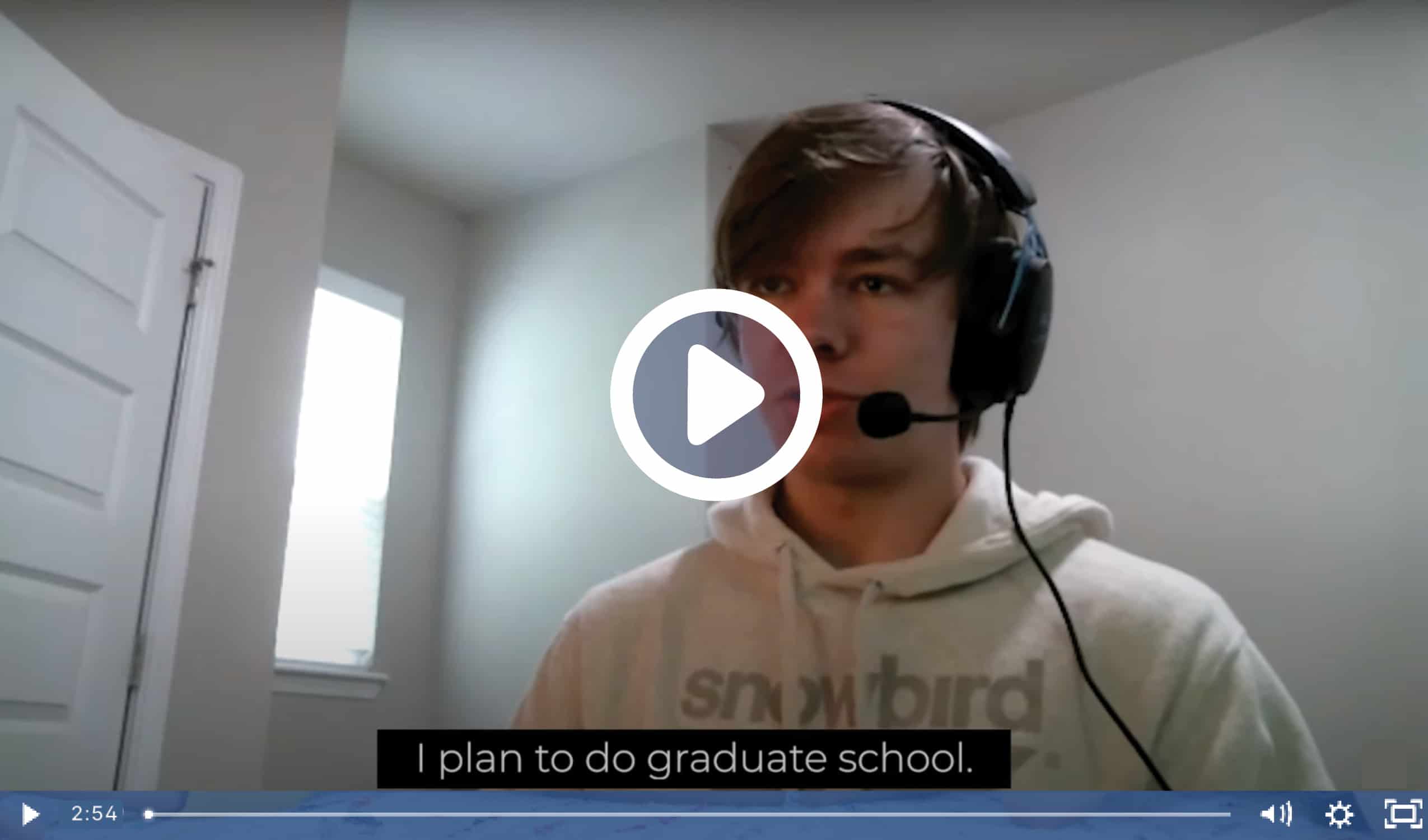
A young man on the autism spectrum found that by using the helmet every night, he was able to accomplish the five duties he was required to do at his job every day. He reported that if he was unable to spend time on the infrared helmet the night before he went to work in the morning, he was not in optimum form the next day and found it very difficult to focus and concentrate to accomplish his five job tasks within a working day.
What is important for families to know about PBM is how it is improving many of the symptoms associated with autism. For instance, parents often report that after a period with the PBM helmet, they see:
- Improved social interaction
- Improved communication
- Less irritability
- Less hyperactivity
- Less repetitive behaviors
- Improved attention span
- Less insomnia
- Increased mental ability
Consistency is most likely the greatest asset to creating a successful situation. As with most therapies, slow and steady accomplishes the task. For individuals with autism who are super sensitive and on the lower end of the spectrum, starting off with a lower frequency and less time is preferable so that tolerability can be achieved. Eventually over time, increased intensity may be possible as tolerance is achieved. Too much intensity at one time may trigger and overactivate the nervous system to turn on, and then it is more difficult to achieve mind over matter in controlling the situation. Ideally, individuals with autism should strive to be in parasympathetic dominance – the rest, digest and relax mode that keeps the nervous system calm. Being in this state helps them navigate their life more efficiently.
Guidelines for PBM Helmet
The PBM helmet is a unique infrared modality that is specifically effective because of its ability to increase blood flow to the brain to enhance cognitive functioning, hence its effectiveness. The PBM helmet is also medical grade infrared which is far more potent than the infrared found in hairdressing salons or spas. Therefore, it is important to discuss a possible protocol with your child’s developmental pediatrician, neurologist, or any clinician who understands PBM and is familiar with the many important healing aspects of infrared light particularly with the helmet.
There are a variety of factors such as length of time, frequency, the specific specs and monitoring that should be taken into consideration to ensure the appropriate protocol for every child. Researchers have found that when PMB is applied at the appropriate wavelength, time parameters and intensity, that there is a reduction in inflammation. This increases ATP production in the mitochondria of the cells and increases the body’s ability to heal faster.
As previously mentioned, it is best to begin slowly with shorter sessions and less times per week to monitor any potential adverse effects such as over stimulation, inability to sleep, headaches and possible irritability. More is not necessarily better when it comes to healing, and it is always advisable to allow time for the body to acclimate and heal at its own pace.
For autism parents, the ATEC (Autism Treatment Evaluation Checklist) from the Autism Research Institute is a phenomenal tool to measure your child’s progress from the onset of diagnosis throughout their healing journey. This tool helps parents compare their child’s own progress to where they were when starting out on this healing journey to where they are in the moment while in the trenches.
Keep in mind there are other assessment tools that can be applied from within the educational system such as CARS (Childhood Autism Rating Scale) or ADOS (Autism Diagnostic Observation Schedule) or medical tools such as EEG (Electroencephalogram) by your child’s doctor that may be tracked over time.
It is also important to take into consideration other therapies and healing modalities the child may be engaging in to support healing. It is ideal when a child’s practitioners can communicate and collaborate among each other on the child’s healing process for the benefit of the child. Parents may find it comforting to have a prospective clinician team for their child because it adds more positive input and overall cohesiveness.
It should also be noted that environmental factors such as sleep, diet and other healing interventions should not be part of any assessment of the effects of the helmet. It is always more of a challenge for parents to discern possible progress of one therapy when there are multiple therapies going on for the child at the same time. Unfortunately, autism parents are unable to have the luxury of doing just one therapy at a time with their child due to the multiple issues involved with healing a child with autism. However, the importance is to be able to see and journal the progress.
Conclusion
One of the most important aspects of the PBM helmet is the ability to improve brain functioning at a cellular level as well as stimulate cellular repair. Infrared healing has the potential to increase cellular energy which means that mitochondrial functioning improves. Increasing cellular energy in the mitochondria increases the production of ATP. The greater the production of ATP, the greater the reduction of neuroinflammation and oxidative stress (especially the reactive oxygen species (ROS) produced by mitochondrial imbalance and dysfunction). Neuroinflammation is a trigger for many neurodegenerative diseases.
PBM has the potential to balance abnormal brain connectivity patterns which is one of the key issues in individuals with autism. The more abnormal these brain patterns are, the more challenged the individual. Infrared healing is specifically effective because of its ability to increase blood flow to the many areas of the body to provide healing and reduce pain and to the brain to enhance cognitive functioning. With the appropriate wavelength and intensity, a PBM helmet can increase ATP allowing the brain to heal, increasing cognition and reducing symptoms.
About Teresa Badillo
In the 1980s she worked overseas in Rome, Italy at the Japanese Embassy in the office of the United Nations (FAO) as a speech writer. She also began her long journey in alternative healing while living in Rome.
After moving to New York and while raising her family of seven children, Teresa embarked on a mission to find alternative non-invasive biomedical, therapeutic, sensory and educational solutions for autism after the diagnosis of her son in the early 1990s.

She won a court case in 1995 against the Rockland County School District in New York to enable ARC Prime Time for Kids to be the first school using Applied Behavioral Analysis teaching method for autism that was paid for by the Rockland County School District. The following year she was instrumental in getting the New York Minister of Education to approve an extension of the ARC license from 5 to 21 years.
She has worked over the years in a number of alternative medical practices with doctors and practitioners organizing various biomedical intervention options for children with autism. Since the mid 1990s, Teresa has served on several boards:
- Foundation for Children with Developmental Disabilities
- The Autoimmunity Project
- Developmental Delayed Resources
- Epidemic Answers
She continues to consult and advise parents on all different areas of autism especially nutritional protocols. Since 2006 she has worked with NutraOrgana, LLC and BioCellular Analysis Testing. She currently researches, writes the newsletter and blogs Teresa’s Corner for The Autism Exchange (AEX). She also writes blog posts and pages for Documenting Hope.
Still Looking for Answers?
Visit the Documenting Hope Practitioner Directory to find a practitioner near you.
Join us inside our online membership community for parents, Healing Together, where you’ll find even more healing resources, expert guidance, and a community to support you every step of your child’s healing journey.
Sources & References
Anders, J.J., et al. Low-level light/laser therapy versus photobiomodulation therapy. Photomed Laser Surg. 2015 Apr;33(4):183-4.
Bicknell, B., et al. Neurodegenerative and Neurodevelopmental Diseases and the Gut-Brain Axis: The Potential of Therapeutic Targeting of the Microbiome. Int J Mol Sci. 2023 May 31;24(11):9577.
Ceranoglu, T.A., et al. Dr. Joseph Biederman's Enduring Legacy: Illuminating the Path to Addressing Autistic Traits in Attention Deficit Hyperactivity Disorder With Transcranial Photobiomodulation. J Atten Disord. 2024 Mar;28(5):664-668.
Ceranoglu, T.A., et al. Transcranial Photobiomodulation in Adults with High-Functioning Autism Spectrum Disorder: Positive Findings from a Proof-of-Concept Study. Photobiomodul Photomed Laser Surg. 2022 Jan;40(1):4-12.
Coelho, D.R.A., et al. Transcranial photobiomodulation for neurodevelopmental disorders: a narrative review. Photochem Photobiol Sci. 2024 Aug;23(8):1609-1623.
da Silva Neto Trajano, L.A., et al. Does photobiomodulation alter mitochondrial dynamics? Photochem Photobiol. 2025 Jan-Feb;101(1):21-37.
Dompe, C., et al. Photobiomodulation-Underlying Mechanism and Clinical Applications. J Clin Med. 2020 Jun 3;9(6):1724.
Fradkin, Y., et al. Transcranial photobiomodulation for reducing symptoms of autism spectrum disorder and modulating brain electrophysiology in children aged 2-7: an open label study. Front Child Adolesc Psychiatry. 2025 Jan 29:4:1477839.
Hamblin, H.R. Could Photobiomodulation Treat Autism Spectrum Disorder? Photobiomodul Photomed Laser Surg. 2022 Jun;40(6):367-369.
Hamilton, C., et al. Lights on for Autism: Exploring Photobiomodulation as an Effective Therapeutic Option. Neurol Int. 2022 Oct 27;14(4):884-893.
Lai, Q.J., et al. Repetitive Transcranial Photobiomodulation Improves Working Memory and Attention in Adults with ADHD: A 4-Week Follow-Up Study. Photobiomodul Photomed Laser Surg. 2025 May;43(5):190-197.
Lin, L., et al. Effectiveness and safety of low-level laser therapy in diabetic peripheral neuropathy: a protocol for a systematic review and meta-analysis. Syst Rev. 2021 Apr 2;10(1):96.
López-Rodríguez, S., et al. Noninvasive Brain Stimulation for Neurodevelopmental Disorders: A Systematic Review. J Neuropsychiatry Clin Neurosci. 2025 Fall;37(4):297-312.
Montazeri, K., et al. Photobiomodulation therapy in mood disorders: a systematic review. Lasers Med Sci. 2022 Dec;37(9):3343-3351.
O'Donnell, C.M., et al. Prefrontal photobiomodulation produces beneficial mitochondrial and oxygenation effects in older adults with bipolar disorder. Front Neurosci. 2023 Oct 31:17:1268955.
Pallanti, S., et al. Transcranial Photobiomodulation for the Treatment of Children with Autism Spectrum Disorder (ASD): A Retrospective Study. Children (Basel). 2022 May 20;9(5):755.
Powner, M.B., et al. Light stimulation of mitochondria reduces blood glucose levels. J Biophotonics. 2024 May;17(5):e202300521.
Powner, M.B., et al. Systemic glucose levels are modulated by specific wavelengths in the solar light spectrum that shift mitochondrial metabolism. PLoS One. 2022 Nov 3;17(11):e0276937.
Wang, K., et al. Photobiomodulation for diabetes and its complications: a review of general presentation, mechanisms and efficacy. Ann Med. 2024 Dec;56(1):2433684.
Zafari, J., et al. Photobiomodulation therapy: a promising treatment for insulin resistance in type 2 diabetes. In Vitro Cell Dev Biol Anim. 2025 Jun;61(6):703-711.
Resources
Videos
Greenburg, Julie.OAT 101: Fundamentals of the Organic Acids Test. Mosaic Diagnostics. 5 Oct 2023.
Woeller, Kurt. Clostridia Bacteria, Autism, and the Organic Acids Test (OAT). Mosaic Diagnostics. 18 Jan 2024.
Woeller, Kurt. The Organic Acid Test (OAT) & Autism: A Scientific Breakthrough in Care with Kurt Woeller, DO. Mosaic Diagnostics. 10 Mar 2025.
Websites
Organic Acids Test. Mosaic Diagnostics.