What Is the Asymmetrical Tonic Neck Reflex (ATNR)?
The Asymmetrical Tonic Neck Reflex, commonly referred to as the ATNR, is one of the key primal/primitive reflexes present in infancy. These reflexes are automatic movements directed from the brainstem, and they help newborns survive and begin early movement and development.
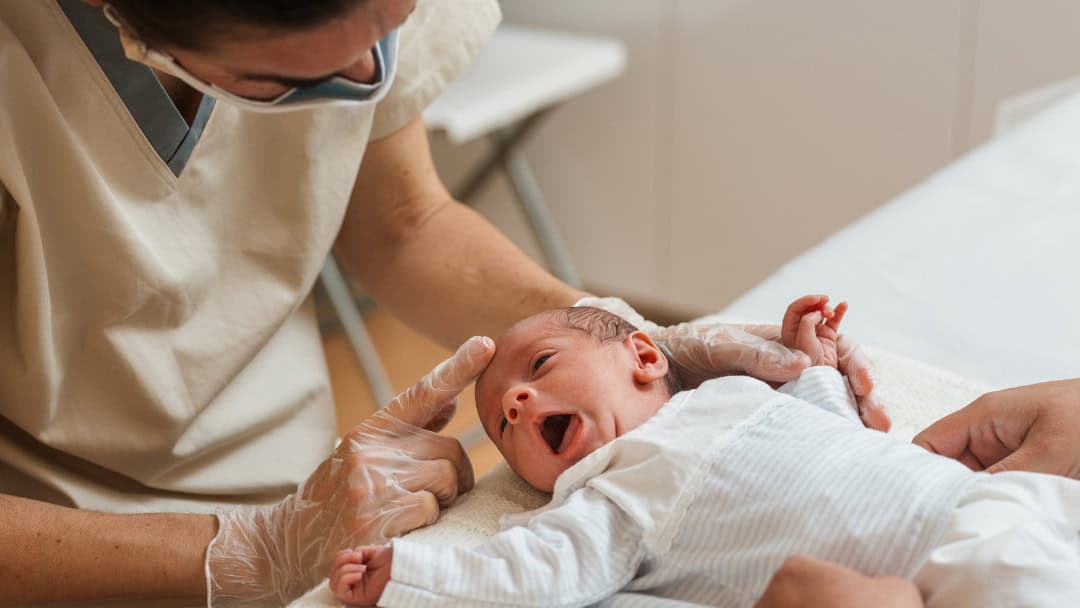
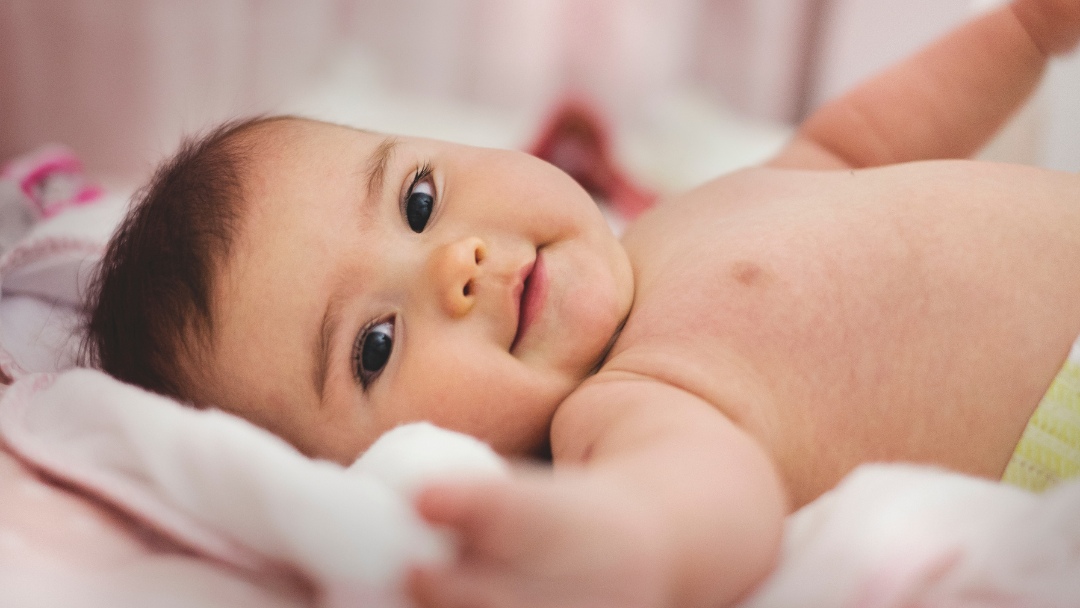
The ATNR is easily identified by a characteristic posture: when a baby lies on its back and turns its head to one side, the arm and leg on that side of the body (the side the head is facing) will extend. At the same time, the arm and leg on the opposite side of the body (at the back of the turned head) will flex. This pose is sometimes called the “fencer position” or the “fencer reflex”.
The ATNR serves important foundational functions for neurological and sensory development. This reflex is directed by head movement and has connections to the vestibular system (which is important for balance and coordination), as well as muscle tone. Its activation is, in fact, partly responsible for the kicking felt by expectant parents during pregnancy, and it is reinforced during the birthing process as the baby moves and corkscrews down the birth canal. This is why practitioners often inquire about a child’s birth history when evaluating a child’s potential retained reflexes and neurodevelopment.
The ATNR prepares the brain and body for complex future skills: it lays the groundwork for eye-hand coordination, early vision development, crossing the midline, and bilateral motor control. Skills such as reading, writing, copying from a blackboard, driving, or simply turning the head to grab an object all rely on the foundational pathways established by the ATNR.
Typical Timeline of Development of the Asymmetrical Tonic Neck Reflex
The ATNR first emerges in utero. Its activation can already be observed through fetal movement patterns; the classic “kicking” felt by expectant mothers is actually a product of this reflex at work before birth.
This reflex is strongly reinforced during the birthing process itself. As the baby passes through the birth canal, the corkscrewing motion required by the ATNR further strengthens its presence.
The ATNR should be fully developed at birth. Newborns placed on their backs and having their heads gently turned from side to side will readily display the extending and flexing of their limbs, demonstrating the reflex in action.
Typical Timeline of ATNR Integration
The ATNR should integrate and be replaced by intentional, controlled movements by about six months of age. At this point, the baby develops voluntary control over head turning and coordinated limb movements, replacing the automatic fencer response.
What Symptoms Appear If the Asymmetrical Tonic Neck Reflex Is Retained?
If integration doesn’t occur, and the ATNR lingers beyond six months, it may disrupt other areas of development, setting the stage for potential motor and cognitive difficulties. A retained ATNR means this early-life reflex was not fully integrated, and it will continue to influence movement and coordination in older children and adults. A retained ATNR can manifest in a wide range of symptoms and difficulties.
Atypical or Skipped Crawling Phase
Because the ATNR strongly influences a baby’s ability to cross the midline, synchronize limb movements, and develop bilateral coordination, one of the earliest red flags is an unusual or skipped crawling phase. Unusual crawling can look like “butt scooting”, crawling with one leg out to the side, and never progressing from “army” crawling to cross-crawling/creeping on all four limbs.
Difficulty with Left–Right Discrimination and Hand Dominance
A child struggling to accurately distinguish left from right, or who does not establish a preferred (dominant) hand by ages 5–7, may have a retained ATNR.
Challenges in Eye-Hand Coordination and Visual Processing
Since the ATNR connects head movement with the arms and the visual system, retained ATNR can significantly disrupt skills like reading, writing, copying from a board, or playing ball and sports. The child may find it difficult to visually track and coordinate fine-motor activities.
Difficulties with Classroom and Everyday Tasks
Children may be unable to read or write efficiently. Tasks that seem unrelated at first—like looking over the shoulder while steering a car—can expose a retained ATNR. If a child’s arms move when their head turns, this is a sign the reflex is still active.
Potential for Misdiagnosis
When the ATNR remains active beyond infancy, it may play a role in certain challenges, such as difficulties with reading, handwriting, math concepts, attention, or visual processing. These learning challenges can sometimes look similar to, or occur alongside, conditions like dyslexia, dysgraphia, dyscalculia, ADHD, or vision differences, but the reflex itself is only one of many possible contributing factors.
What Causes a Retained Asymmetrical Tonic Neck Reflex?
A number of factors may interrupt the natural integration of the ATNR:
Insufficient Movement Opportunities in Infancy
Modern lifestyles can hinder natural development. Babies who spend considerable time in swings, bouncers, or car seats rather than having unrestricted floor and “tummy” time may not get the movement variety needed to stimulate and integrate their primitive reflexes.
Birth Experience
Atypical or traumatic birth experiences—including C-section deliveries, breech birth, or very quick labor—may interfere with the reinforcement and integration of the ATNR. Because the birthing process helps reinforce the reflex, missing this can leave it less mature.
Other Developmental Disruptions
Medical issues, premature birth, and neurological problems can also interrupt the integration pathway for the ATNR and other primitive reflexes. Please read the section entitled Regression of Milestones in our Developmental Delays Main Info Page as well as the section entitled What Can Pause, Impair, or Interrupt Brain Development? in our How a Child’s Brain Develops article for detailed information.
What Can Be Done for a Retained Asymmetrical Tonic Neck Reflex?
With the right activities and support, a retained ATNR can often be integrated later in life—sometimes even in adulthood. It’s never too late to revisit foundational movement experiences. Provide older children with opportunities for movement on the floor, including reaching, rolling, crawling, and tummy-time equivalents.
If you suspect a retained ATNR, consider seeking a qualified occupational therapist or other pediatric specialist trained in reflex integration. These therapists can perform a comprehensive evaluation and implement a tailored reflex integration plan. Please note that not all occupational therapists or doctors of physical therapy are trained to evaluate and integrate retained reflexes.
Because the ATNR can also affect visual processing, it may be beneficial to have your child evaluated by a developmental/behavioral optometrist. In addition, if you and your child experienced birth difficulties, evaluation and treatment by an osteopath and/or chiropractor could also be helpful.
About Maria Rickert Hong CHHC
Maria Rickert Hong is a Co-Founder of, and the Education and Media Director for, Documenting Hope.
She is a former sell-side Wall Street equity research analyst who covered the oil services sector at Salomon Smith Barney and Lehman Brothers under Institutional Investor #1 ranked analysts.
Later, she covered the gaming, lodging & leisure sector at Jefferies & Co. and Calyon Securities. She quit working on Wall Street when her first son was born.

Prior to working on Wall Street, she was a marketing specialist for Halliburton in New Orleans, where she also received her MBA in Finance & Strategy from Tulane University.
She is the author of the bestselling book Almost Autism: Recovering Children from Sensory Processing Disorder and the co-author of Brain Under Attack: A Resource for Parents and Caregivers of Children with PANS, PANDAS, and Autoimmune Encephalitis. She is a co-author of Reversal of Autism Symptoms among Dizygotic Twins through a Personalized Lifestyle and Environmental Modification Approach: A Case Report and Review of the Literature, J. Pers. Med. 2024, 14(6), 641.
Maria is also a Certified Holistic Health Counselor. Her work can be found on DocumentingHope.com, Healing.DocumentingHope.com, Conference.DocumentingHope.com and MariaRickertHong.com
Still Looking for Answers?
Visit the Documenting Hope Practitioner Directory to find a practitioner near you.
Join us inside our online membership community for parents, Healing Together, where you’ll find even more healing resources, expert guidance, and a community to support you every step of your child’s healing journey.
Sources & References
Adolph, K.E., et al. Learning to crawl. Child Dev. 1998 Oct;69(5):1299-312.
Amos, P. Rhythm and timing in autism: learning to dance. Front Integr Neurosci. 2013 Apr 19;7:27.
Akhmatova, N.K., et al. Influence of MNRI on the Immune Status of Children with Down Syndrome. Journal of Clinical & Cellular Immunology. 8 (2017): 1-8.
Barnhill, E. Neural connectivity, music, and movement: a response to Pat Amos. Front Integr Neurosci. 2013 Apr 24;7:29.
Bell, C., et al. The Effect of the MNRI Method on Neurotransmitter Biomarkers of Individuals with Neurodevelopmental Disorders. Neuroscience and Medicine. 2019.
Cho, H., et al. Effects of Action Observation Training with Auditory Stimulation on Static and Dynamic Balance in Chronic Stroke Patients. J Stroke Cerebrovasc Dis. 2020 May;29(5):104775.
Deiss, T., et al. Physiological Markers and Reflex Pattern Progression in Individuals with Neurodevelopmental Deficits Utilizing the MNRI Method. Neuroscience and Medicine. 2019.
Dumuids-Vernet , M.V., et al. Stimulating the motor development of very premature infants: effects of early crawling training on a mini-skateboard. Front Pediatr. 2023 Jun 6:11:1198016.
Gajewska, E., et al. Crawl Position Depends on Specific Earlier Motor Skills. J Clin Med. 2021 Nov 29;10(23):5605.
Goddard Blythe S. Are Immature Neuromotor Skills Significant Factors in Educational Under-achievement and Special Educational Needs? Literature review of the role of Primitive Reflexes as Indicators and Measures of Neuromotor Immaturity. Special School. (2023);LXXXIV(2):111-123.
Grigg. T.M., et al. Primitive Reflex Integration and Reading Achievement in the Classroom. Journal of Neurology and Experimental Neuroscience. 2023; 9(1), 18-26.
Grigg, T.M., et al. Retained primitive reflexes: Perceptions of parents who have used Rhythmic Movement Training with their children. J Child Health Care. 2018 Sep;22(3):406-418.
Grzywniak, C. Integration exercise programme for children with learning difficulties who have preserved vestigial primitive reflexes. Acta Neuropsychologica. 2017;15(3).
Hardy, M.W., et al. Rhythm, movement, and autism: using rhythmic rehabilitation research as a model for autism. Front Integr Neurosci. 2013 Mar 28;7:19.
Herbert, J., et al. Crawling is associated with more flexible memory retrieval by 9-month-old infants. Dev Sci. 2007 Mar;10(2):183-9.
Hong, H.J., et al. Effect of Rhythmic Movement Program to Improve Walking Ability for Elderly Patients with Stroke. Indian Journal of Science and Technology. 2016 Jul;9(26).
Iverson, J.M. Developing language in a developing body: the relationship between motor development and language development. J Child Lang. 2010 Mar;37(2):229-61.
Jordan-Black, J. The effects of the Primary Movement programme on the academic performance of children attending ordinary primary school. Journal of Research in Special Educational Needs. 2005 Nov;5(3):101 – 111.
Kadivar, Z., et al. Effect of step training and rhythmic auditory stimulation on functional performance in Parkinson patients. Neurorehabil Neural Repair. 2011 Sep;25(7):626-35.
Khan, Z., et al. Slow CCL2-dependent translocation of biopersistent particles from muscle to brain. BMC Med. 2013 Apr 4:11:99.
Ladányi, K. et al. Is atypical rhythm a risk factor for developmental speech and language disorders? Wiley Interdiscip Rev Cogn Sci. 2020 Sep;11(5):e1528.
Lakatos, P., et al. A New Unifying Account of the Roles of Neuronal Entrainment. Curr Biol. 2019 Sep 23;29(18):R890-R905.
Masgutova, S., et al. Effect of the MNRI Reflex Neuromodulation on the QEEG and Neurotransmitters of Children Diagnosed with Cerebral Palsy. 2020.
Masgutova, S., et al. Effects of MNRI Visual Reflex Neuro-Training on Visual and Academic Skills of Children with Autism. International Journal of School and Cognitive Psychology 05 (2018): 1-15.
Masgutova, S. Post-Trauma Recovery in Children of Newtown, CT using MNRI Reflex Integration. Journal of
Traumatic Stress Disorders & Treatment. 5(5) 2017.
Masgutova, S., et al. Reflex Profile of Children with Down Syndrome Improvement of Neurosensorimotor Development Using the MNRI® Reflex Integration Program. International Journal of Neurorehabilitation. 3 (2016): 1-9.
Masgutova, S., et al. Progress with Neurosensorimotor Reflex Integration for Children with Autism Spectrum Disorder. 2016.
Masgutova, S. Reflex Integration Disorder as a New Treatment Paradigm for Children with Autism. 2015.
McEwan, M.H., et al. Early infant crawling experience is reflected in later motor skill development. Percept Mot Skills. 1991 Feb;72(1):75-9.
McWhirter, K., et al. The association between learning disorders, motor function, and primitive reflexes in pre-school children: A systematic review. J Child Health Care. 2022 Jul 13;13674935221114187.
Melillo, R., et al. Persistent Childhood Primitive Reflex Reduction Effects on Cognitive, Sensorimotor, and Academic Performance in ADHD. Front Public Health. 2020 Nov 17;8:431835.
Mohamed, M.A., et al. Sensory integration versus Masgutova neuro-sensorimotor reflex integration program on controlling primitive reflexes and gross motor abilities in children with diplegic cerebral palsy. Physiother Res Int. 2023 Jun 29;e2030.
Nowak, K., et al. Evaluation of the Therapeutic Effect of MNRI Reflex Neuromodulation on Children Diagnosed with Autism Based on Reflex Assessments, QEEG Analysis and ATEC Questionnaire. 2020.
Pilecki, W., et al. The impact of rehabilitation carried out using the Masgutova Neurosensorimotor Reflex Integration method in children with cerebral palsy on the results of brain stem auditory potential examinations. Adv Clin Exp Med. 2012 May-Jun;21(3):363-71.
Schmidt, N.B., et al. Exploring human freeze responses to a threat stressor. J Behav Ther Exp Psychiatry. 2008 Sep;39(3):292-304.
Stephens-Sarlós, E., et al. Changes in primitive reflexes in older adults and their relationship to mental health indices: An experimental investigation. Exp Gerontol. 2024 Oct 15:196:112583.
Stephens-Sarlós, E., et al. The efficacy of the sensorimotor training program on sensorimotor development, auditory and visual skills of schoolchildren aged 5–8 years. Child & Youth Care Forum. 2024 Aug;54(2):323-352.
Stephens-Sarlós, E. The relationship between primitive reflex profile and development of vestibular maturity in early school years. Exercise and Quality of Life Journal (2024) 16(2): 11-16.
Suh, J.H., et al. Effect of rhythmic auditory stimulation on gait and balance in hemiplegic stroke patients. NeuroRehabilitation. 2014;34(1):193-9.
Tatarinova, T.V., et al. The Impact of MNRI Therapy on the Levels of Neurotransmitters Associated with Inflammatory Processes. Int J Mol Sci. 2020 Feb 18;21(4):1358.
Teitelbaum, P., et al. Movement analysis in infancy may be useful for early diagnosis of autism. Proc Natl Acad Sci U S A. 1998 Nov 10;95(23):13982-7.
Teitelbaum, P., et al. Reflexes gone astray in autism in infancy. Journal of Developmental and Learning Disorders, 2003;6, 15-22.
Van Hirtum, T., et al. Is atypical rhythm a riskfactor for developmental speech and language disorders? J Assoc Res Otolaryngol. 2021 Jul;22(4):465-480.
Winkler, I., et al. Newborn infants detect the beat in music. Proc Natl Acad Sci U S A. 2009 Feb 17;106(7):2468-71.
Xiong, Q.L., et al. Measurement and Analysis of Human Infant Crawling for Rehabilitation: A Narrative Review. Front Neurol. 2021 Oct 11:12:731374.
Zaigham, M., et al. Prelabour caesarean section and neurodevelopmental outcome at 4 and 12 months of age: an observational study. BMC Pregnancy and Childbirth. 2020 (20)564.
Zentner, M., et al. Rhythmic engagement with music in infancy. Proc Natl Acad Sci U S A. 2010 Mar 30;107(13):5768-73.
Resources
Articles
Gazca, M. Rebooting Development with a Rhythmic Motor Intervention for Children. Minneapolis: St. Catherine University, May 2012.
Move, Play, Thrive: Vision Doctor on Rhythmic Movements + Research about Visual Processing Issues.
Svetlana Masgutova Educational Institute: What can make reflexes dysfunctional.
Books
Blomberg MD, Harald and Dempsey, Moira. Movements That Heal, Rhythmic Movement Training and Primitive Reflex Integration. Independenly published, 2011.
Brandes, Bonnie. The Symphony of Reflexes: Interventions for Human Development, Autism, ADHD, CP, and Other Neurological Disorders. CreateSpace Independent Publishing Platform, 2016.
Carr, Kathryn. The Depth of Her Touch: A Biography of Svetlana Masgutova, PhD, Creator of the MNRI® Reflex Integration Program. Svetlana Masgutova Educational Institute. September 1, 2023.
A Collective Work. Reflexes: Portal to Neurodevelopment and Learning. Svetlana Masgutova Educational Institute, LLC; First Edition. January 1, 2015.
Dennison, Paul E., et al. Brain Gym: Simple Activities for Whole Brain Learning. Edu Kinesthetics. June 1, 1992.
Goddard Blythe, Sally. The Well Balanced Child: Movement and Early Learning. Hawthorn Press, 2005.
Goddard, Sally. Reflexes, Learning and Behavior, A Window Into the Child’s Mind. Fern Ridge Press, 2005.
Masgutova, Denis, et al. Parents' Guide to MNRI® Masgutova Neurosensorimotor Reflex Integration. Svetlana Masgutova Educational Institute, LLC; First Edition. January 1, 2015.
Masgutova, Svetlana, et al. Autism: Maximize Potential with MNRI® Reflex Integration. Svetlana Masgutova Educational Institute; First Edition. January 1, 2023.
Masgutova, Svetlana, et al. MNRI® Reflex Integration for Your Daily Well-Being. Svetlana Masgutova Educational Institute, LLC. January 1, 2020.
Masgutova, Svetlana, et al. Post Trauma Recovery: Gentle, Rapid, and Effective Treatment with Reflex Integration. 1st World Publishing. January 17, 2018.
Masgutova, Svetlana, et al. Trauma Recovery - You Are A Winner; A New Choice Through Natural Developmental Movements. 1st World Publishing. May 24, 2007.
Websites
Balance Brain Achievement Centers
Institute for Neuro-Physiological Psychology
My Child Will Thrive: Primitive Reflexes Cheat Sheet