
Safety and Efficacy of Medical Interventions
When it comes to adopting new clinical treatment strategies or therapies in modern medicine, we tend to think that any new therapy or approach to healing comes through a tidy, peer-reviewed, and rigorous scientific process. We have built massively complex systems to ensure the safety and efficacy of any new therapies brought to the market.
Doctors and other medical professionals want assurance that any therapy is safe, based in evidence, and endorsed by medical authorities, professional medical bodies and federal agencies. They do not want to put any patients in harm’s way. They also want to protect patients from companies irresponsibly claiming efficacy, safety or therapeutic impact just to make a buck.
Up until recently, we believed that this process worked and that only safe and effective products could make their way into doctors’ offices. Sadly, we’ve learned over recent years that the scientific and regulating bodies are often corrupt and unsafe products do make it onto the market all the time (see the stories of Vioxx, Oxycontin, and the rushed COVID gene therapy as glaring examples).
What We Think the Process Is
Yet, despite this collective disillusionment with modern medicine that our society is undergoing, we are still under the impression that new treatments or cures come to us through a very specific process that looks something like this:
- First comes a hypothesis, perhaps theoretical or basic science, that informs a guess that a certain therapy will be effective.
- Then come various stages of randomized controlled trials
- Then come publications of results
- Then comes the approval by regulatory agencies
- Then come the guidelines and best practices
- Finally, we see widespread adoption and a new standard of care.
But this is not the whole story, and it does not truly reflect how medical knowledge or clinical wisdom always comes to be.
What Is a Case Report?
Some of the most important turns in medical history began with something much humbler: a doctor noticed what happened to one patient, or a small group of patients, and had the courage to write it down and share it with his or her peers.
This is what is known as the case report.
A case report is not the final word on any clinical observation, and it is not pretending to represent full medical truth. It does not prove any one theory or settle any particular viewpoint on an issue. No one thinks that it is the equivalent of a randomized controlled trial. But it can be the first alarm bell. The first clue. The first crack in a medical assumption that everyone thought was settled.
The Case of Thalidomide
Sometimes, one carefully observed patient changes the future.
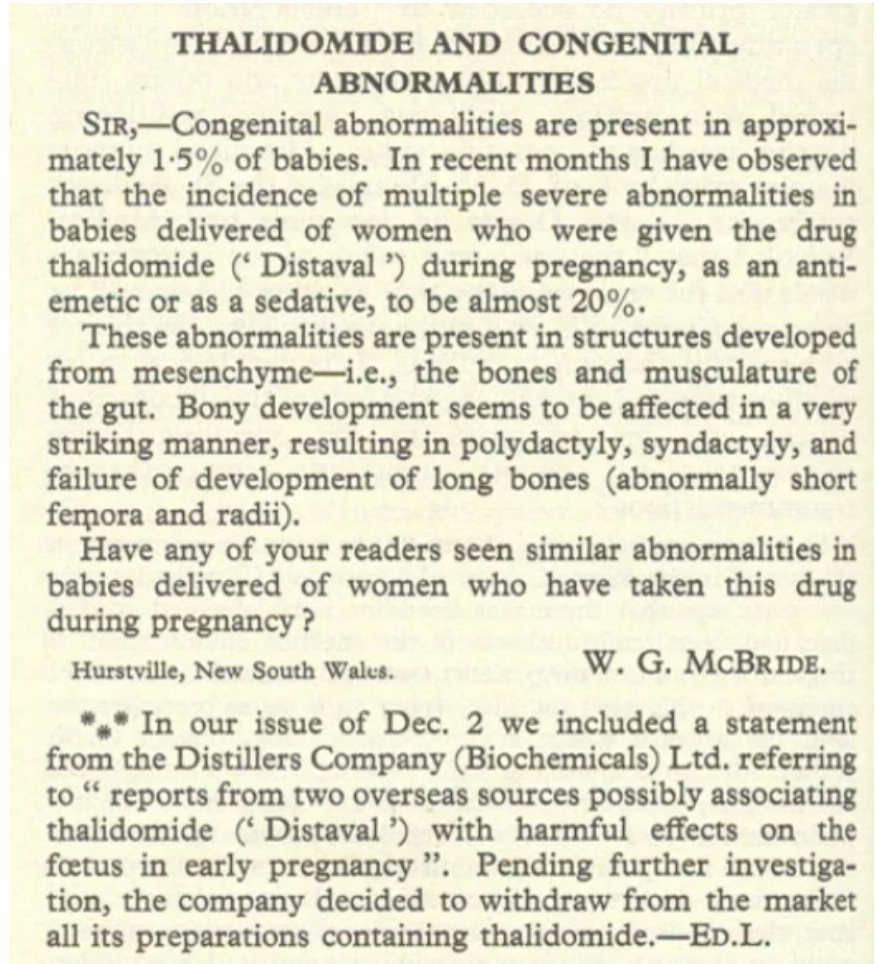
In 1961, Australian obstetrician W. G. McBride published a short letter in The Lancet warning that thalidomide, then used in pregnancy as a sedative and anti-nausea drug, appeared linked to severe congenital abnormalities. His letter asked whether other physicians were seeing the same thing. That small, published warning helped expose one of the greatest pharmaceutical tragedies of the twentieth century and helped trigger major reforms in drug safety.
The question almost asks itself: What if he had not written it down? What if he had dismissed what he was seeing as a coincidence? How many more babies would have been harmed before the pattern became impossible to ignore?
That is precisely why case reports matter.
Case reports give visibility to real medical and scientific truths that may be lying in the blind spot of most clinicians or may be reflecting new knowledge about a new sort of medical condition driven by new environmental factors.
The Case of Insulin
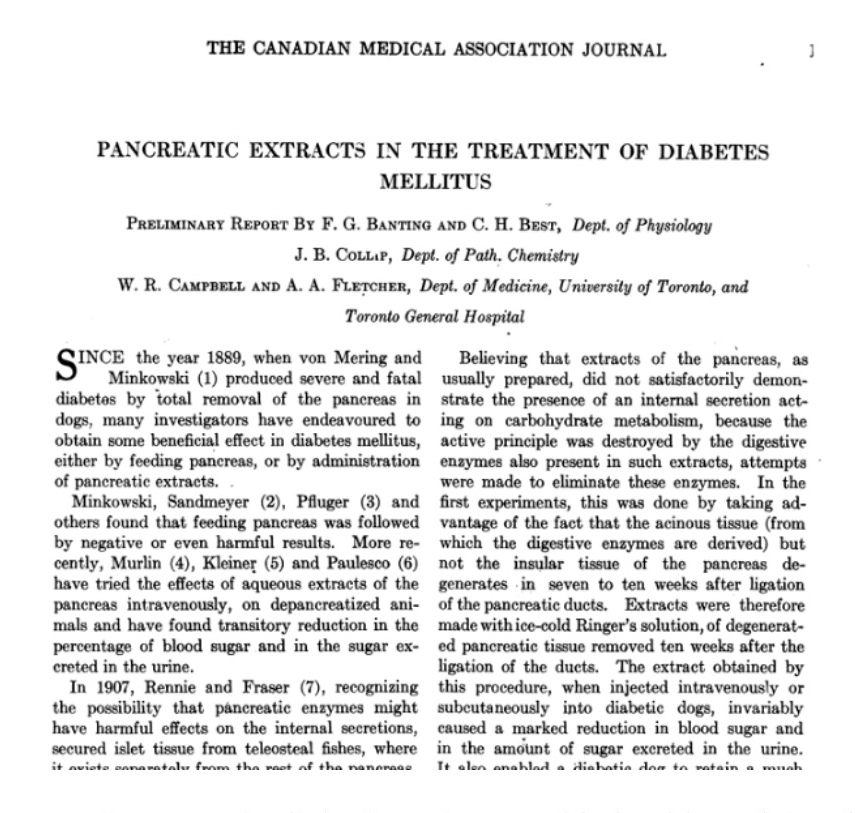
The history of insulin provides another example of how case reports can be critical, but this story is about a therapeutic discovery, rather than a toxic exposure. In 1922, Leonard Thompson, a 14-year-old boy with severe diabetes, was treated with pancreatic extract in Toronto.
Before insulin, Type 1 Diabetes in children was usually a death sentence. Children were often managed with starvation diets that might buy time but did not restore life. The early clinical report by physicians and scientists Banting, Best, Collip, Campbell, and Fletcher documented the effects of pancreatic extract in diabetic patients and helped launch insulin therapy into clinical use.
The paper published in 1922 was essentially a case report documenting the positive impact of a novel/experimental treatment for this one young man with a condition that had very little in the way of treatment options
This single patient did not “prove” insulin therapy by modern standards. But that case report certainly opened doors. What soon followed was replication, then distillation and purification of the insulin, then manufacturing. Within a short time, one of the most feared childhood diseases became manageable.
The Case of Celiac Disease
The same pattern appears in celiac disease. For years, children with celiac disease wasted away with diarrhea, bloating, malnutrition, and failure to thrive. Physicians suspected food mattered, but the exact trigger remained unclear. It wasn’t until a Dutch pediatrician, Willem Karel Dicke, made an observation during wartime food shortages in the Netherlands.
What Dr. Dicke observed was that when bread and wheat became scarce, children with celiac disease improved. When wheat returned, symptoms returned. His observations helped establish the gluten-free diet as the treatment for celiac disease. Dr. Dicke published a clinical case series in a thesis paper about several children he had observed with this phenomenon. Can you imagine how many more people would have suffered from celiac disease had this physician not documented his observation?
Case Reports of Other “Lifelong” Conditions
In the context of conventional western medicine, we are accustomed to hearing things like “There is no cure,” “This is lifelong,” “This is genetic,” “We can only manage the symptoms,” or “That recovery is only anecdotal, and not likely to happen for you.” We hear this for things like fibromyalgia, multiple sclerosis, Parkinson’s, Alzheimer’s, Lyme disease and autism. We are also told that our best hope is to wait for the pharmaceutical industry to finish testing their pipeline of drugs for each condition. Without randomized controlled trials, there will be no treatments.
And yet. . . there are case reports of full recovery for pretty much all of these conditions. The case reports are the signal in the noise. They are meant to be the first step towards a true path to healing. And it is our responsibility to take the next step, and the next, and the next after that. Especially when we are talking about children suffering with chronic illnesses.
The Case of Autism
Children are supposed to be healthy. A child getting diagnosed with a chronic health or developmental condition tells us that there is something fundamentally wrong with their environment. There are imbalances that need to be addressed. There may be immune stress, metabolic stress, nutritional stress, toxicant exposures, infections, inflammation, nervous-system dysregulation, and environmental total load that is too great for their little bodies to handle. When a child improves after those burdens are addressed, that story deserves careful documentation.
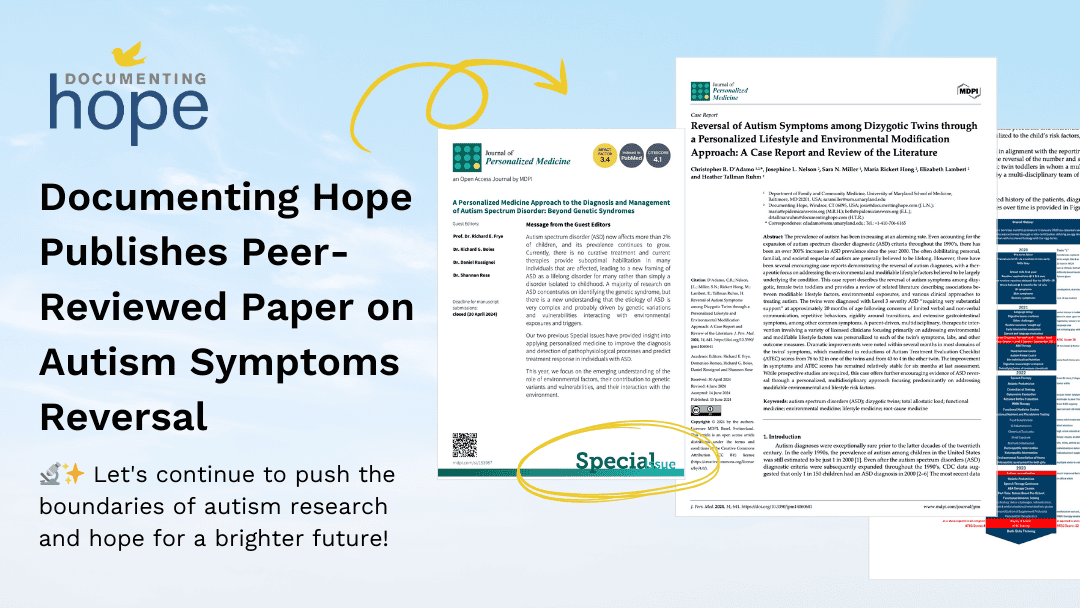
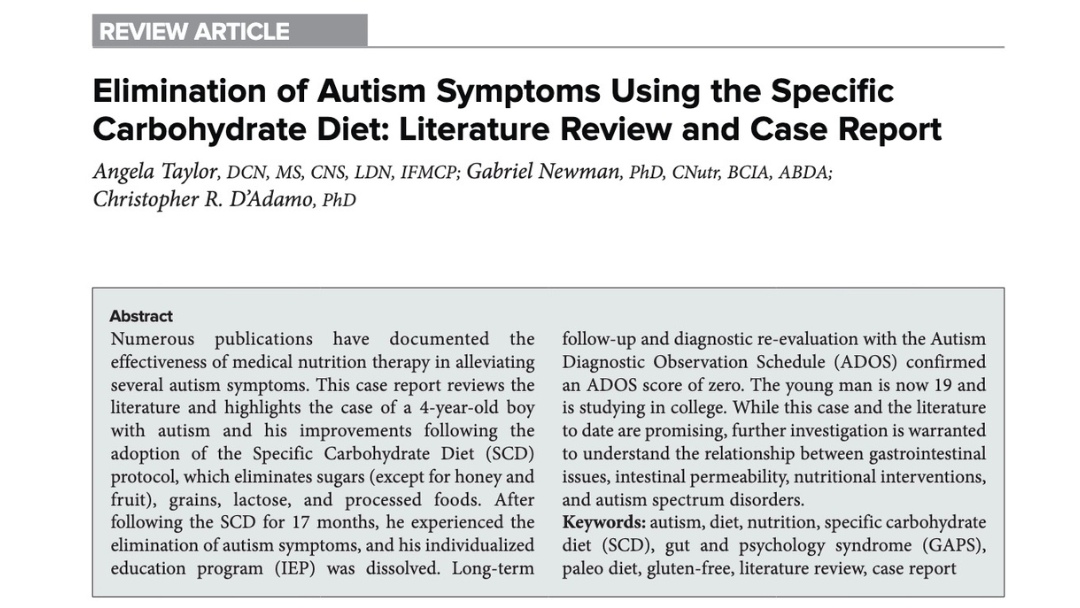
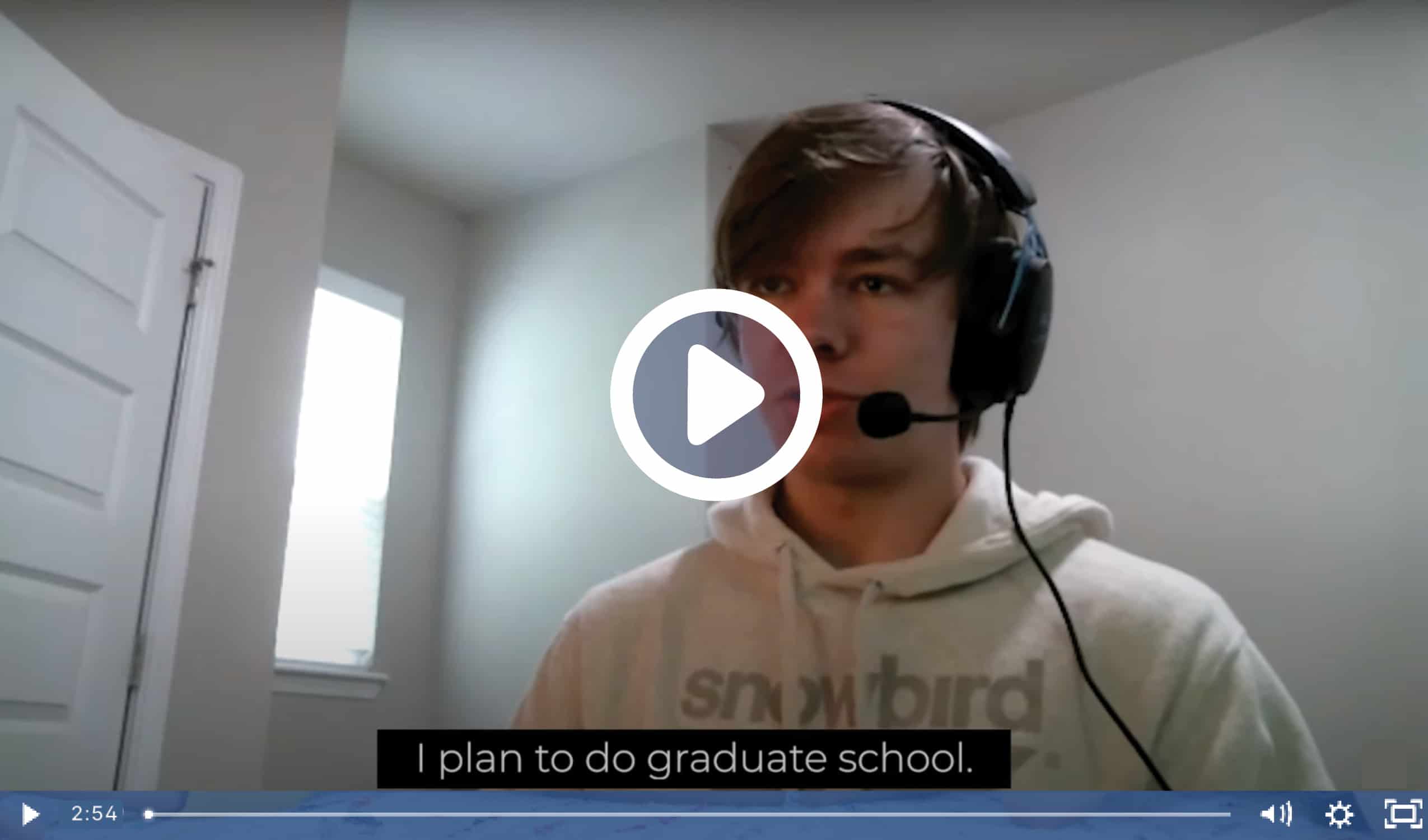
This is precisely what Documenting Hope has done. We have published two case reports (here and here) of three children reversing their autism diagnoses, and we have more on the way.
What a Case Report Can Do
The job of a case report is not to settle scientific debate or declare any universal truths. The job is to say: “Hey! You Guys! Healing happened here, and we need to understand how it happened and how we can make it available for more children.”
These case reports are especially important when the current model fails to explain the reason why a child has the condition in the first place and when it leaves parents with no options for treatment. Clinicians should be given more funding and support to be able to document what they are seeing in their clinics. Just because we’ve only published two papers does not mean that these are the only children with autism who have lost their diagnosis. There are thousands of children who have experienced this. There is so much signal in the noise it’s deafening!
This is why case reports matter. This is why Documenting Hope will continue to pursue them and will take the next steps, and the next steps after that, and keep going until we have a new standard of care. And until children are healthy again.
If you are a parent on a healing journey with your child, please know how important it is to document your experience. Your healing journey could be the next published case report. Here is a link where you can learn how to document your own case: https://documentinghope.com/documenting-your-own-hope-with-a-case-report/
About Beth Lambert
Beth Lambert is a former healthcare consultant and teacher. As a consultant, she worked with pharmaceutical, medical device, diagnostic and other health care companies to evaluate industry trends.
She is the author of A Compromised Generation: The Epidemic of Chronic Illness in America’s Children (Sentient Publications, 2010). She is also a co-author of Documenting Hope's Brain Under Attack: A Resource for Parents and Caregivers of Children with PANS, PANDAS, and Autoimmune Encephalitis. She is a co-author of Reversal of Autism Symptoms among Dizygotic Twins through a Personalized Lifestyle and Environmental Modification Approach: A Case Report and Review of the Literature, J. Pers. Med. 2024, 14(6), 641.
In 2009, Beth founded Documenting Hope and currently serves as Executive Director. Beth attended Oxford University, graduated from Williams College and holds a Masters Degree in American Studies from Fairfield University.
Still Looking for Answers?
Visit the Documenting Hope Practitioner Directory to find a practitioner near you.
Join us inside our online membership community for parents, Healing Together, where you’ll find even more healing resources, expert guidance, and a community to support you every step of your child’s healing journey.
Sources & References
Banting, F.G., et al. Pancreatic extracts in the treatment of diabetes mellitus. Canadian Medical Association Journal. 1922.
D’Adamo, C.R., et al. Reversal of Autism Symptoms among Dizygotic Twins through a Personalized Lifestyle and Environmental Modification Approach: A Case Report and Review of the Literature. J Pers Med. 2024, 14(6), 641.
Dicke, W.K. Coeliakie. Een onderzoek naar de nadelige invloed van sommige graansoorten op de lijder aan coeliakie (PhD thesis). Utrecht, NL: University of Utrecht, 1950.
McBridge, W.G. Thalidomide and Congenital Abnormalities. Lancet, Letters to the Editor. 16 Dec 1961, 278(7216) 1358.
Taylor, A., et al. Elimination of Autism Symptoms Using the Specific Carbohydrate Diet: Literature Review and Case Report. Integrative Medicine. 2026 Feb;25(1).