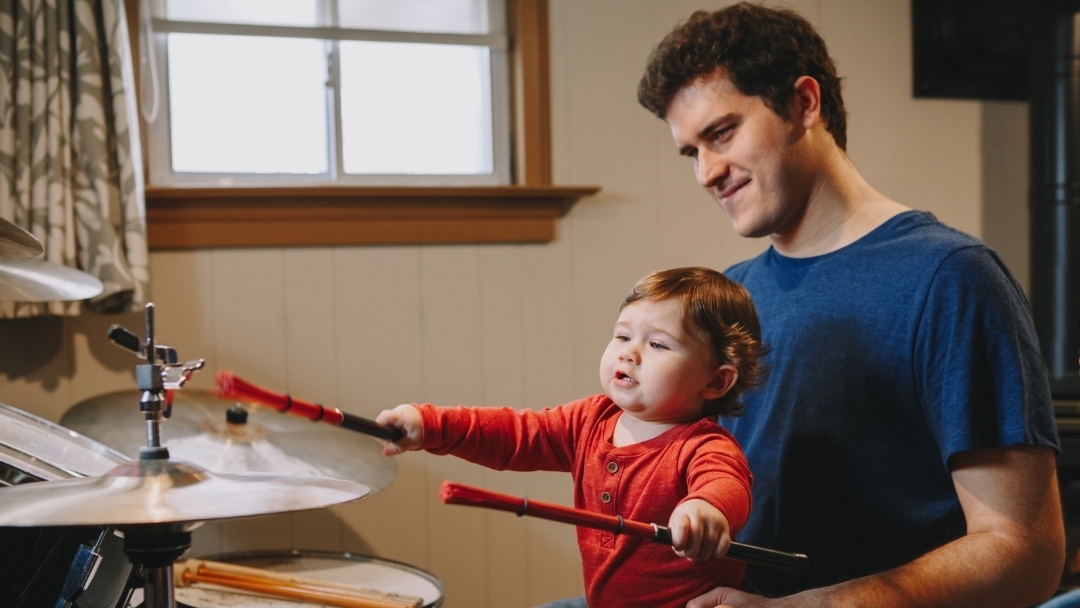
Rita Whitaker-Haun and Sheldon Haun explain in this post about the connection between music and autism.
A Whole-Child Approach to Music
As a music specialist in the public schools for 16 years, I have had orchestral and general music experience with children from kindergarten through twelfth grade. In 1992, my new teaching assignment included an autistic preschool class; I had not worked with music and autism before, and it became possibly the most rewarding experience I have had in those 16 years.
I learned from the classroom teacher that the previous “formal music class” had not engaged the children: the songs were too sophisticated, the children didn’t play any instruments, they didn’t do any movement…they were not involved.
I realized that I would need an approach that appealed to the whole child, with each class including both fine and large motor movement as well as listening, chanting, singing, and playing instruments.
Here’s Our Routine
I would also need to make sure that there were ample opportunities for communication and interaction between the children and adults. We scheduled the 12 children with autism to meet twice a week for 30 minutes. The following routine evolved:
- Because children with autism have a difficult time with change, we sing the same transition song all year long to facilitate their moving from the regular classroom to the music room.
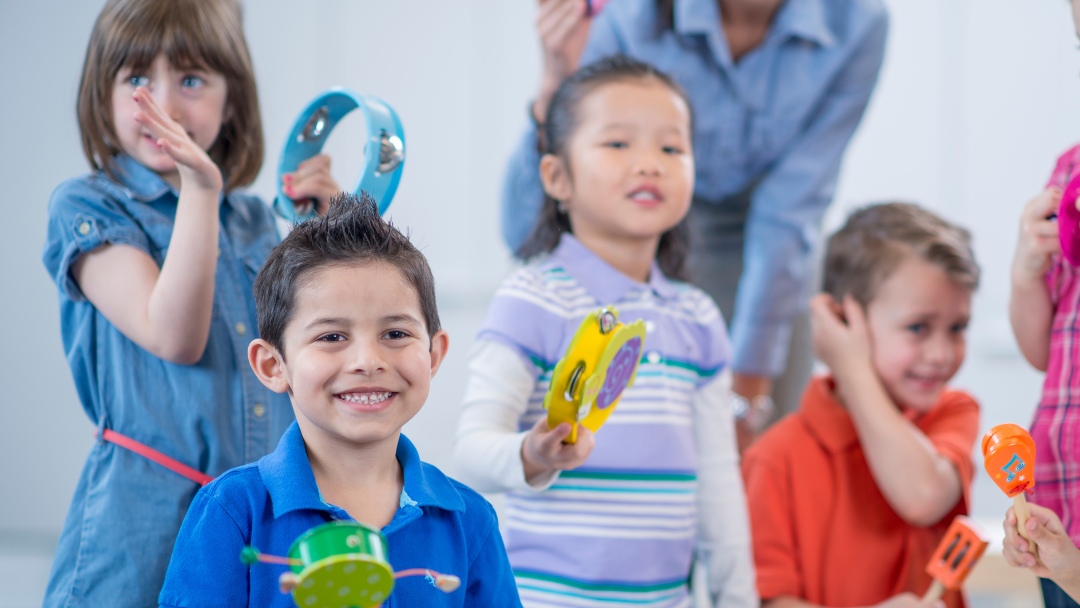
- After greeting the class as a whole, we reinforce each child’s sense of self by singing a greeting song which includes their names. The song is accompanied by unpitched percussion instruments, which each child is encouraged to retrieve and return.
- To enhance fine motor coordination and speech, we do a fingerplay or chant. Typically, I model the fingerplay as other adults assist the children in discovering their separate fingers. Although the children delight in familiar chants, we also expose them to new words to increase their vocabulary.
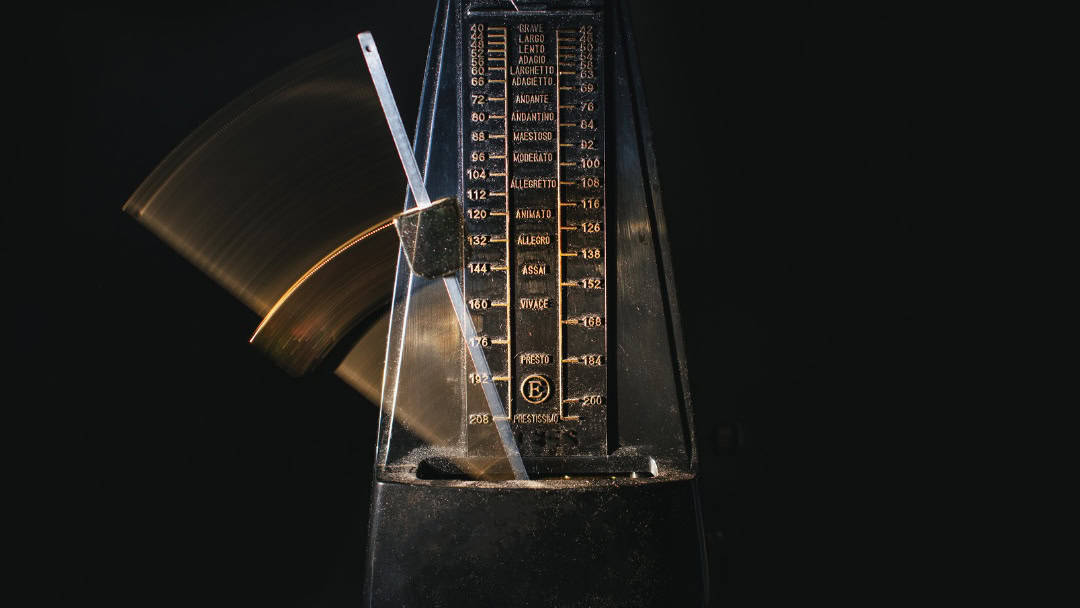
- My personal favorite is to have the children take turns accompanying a song on the drum or resonator bells; the child sets the tempo and everyone sings along. The player is then asked to pass the instrument and mallets politely to the next player. This enriches the children’s social, behavioral, and emotional development.
- When the children are ready to get up, we sing a song and move our bodies in place. We may transfer weight from one leg to another to a steady beat or move high and low to illustrate changes in pitch or size.
- We then move around the room to recorded music; I use the same recording for several class meetings, varying the type of music from waltzes to marches to ethnic music.
- Returning to our circle, we sit on the floor and enjoy rocking to a soothing lullaby. Because we were in a public school setting, there was not always one adult per child; however, the student-teacher ratio was small, and each child was shown some affection and support.
- Once the children are calmed, I sing and chant various patterns, words, or nonsense sounds into a pretend microphone and listen for the class to echo. The teacher and aides provide the formal echo, but the children are encouraged to respond individually. What I speak or sing into the microphone for solo echoes depends upon the child, perhaps a pattern from one of the songs, a word the classroom teacher is working on, or something we have heard the child saying or singing. Since children with autism often have delays in processing information, they may or may not echo right away.
- We always show appreciation for any attempt on each child’s part, whenever it comes – building communication skills is what we’re after.
- We end the class with a circle dance which engages the children in large motor movement while encouraging a sense of community. As a signal to the children that class is finished, we sing the same good-bye song all year long – just as we do with the hello song at the beginning of class.
Music Is Magic
Without exception, I find that something extraordinary happens during each class. A child who has been crying at school for three days straight finally stops crying and becomes engaged in an activity. A child who has not spoken to us may speak.
A child who always pushes the drum away finally decides it’s okay to play. A child who refuses to pass the bells to the next player politely does so. I have learned not to assume that these children cannot do an activity that I would do with “normal” preschoolers. I have seen that early intervention does make a difference in the life of an autistic child and that appealing to the whole child is a way to make this connection.
Reprinted with permission from Early Childhood Connections, published by the Foundation for Music-Based Learning. Early Childhood Connections is a quarterly interdisciplinary journal featuring current research and pedagogical view points regarding music, movement, and language development of young children.
Still Looking for Answers?
Visit the Documenting Hope Practitioner Directory to find a practitioner near you.
Join us inside our online membership community for parents, Healing Together, where you’ll find even more healing resources, expert guidance, and a community to support you every step of your child’s healing journey.
Sources & References
Amos, P. Rhythm and timing in autism: learning to dance. Front Integr Neurosci. 2013 Apr 19;7:27.
Barnhill, E. Neural connectivity, music, and movement: a response to Pat Amos. Front Integr Neurosci. 2013 Apr 24;7:29.
Chanda, M.L., et al. The neurochemistry of music. Trends Cogn Sci. 2013 Apr;17(4):179-93.
Chang, E.T., et al. The effects of music on the sleep quality of adults with chronic insomnia using evidence from polysomnographic and self-reported analysis: a randomized control trial. Int J Nurs Stud. 2012 Aug;49(8):921-30.
Gadberry, A.L. Steady beat and state anxiety. J Music Ther. 2011 Fall;48(3):346-56.
Garza-Villarreal, E.A., et al. Music reduces pain and increases functional mobility in fibromyalgia. Front Psychol. 2014 Feb 11:5:90.
Grape, C., et al. Does singing promote well-being?: An empirical study of professional and amateur singers during a singing lesson. Integr Physiol Behav Sci. 2003 Jan-Mar;38(1):65-74.
Hardy, M.W., et al. Rhythm, movement, and autism: using rhythmic rehabilitation research as a model for autism. Front Integr Neurosci. 2013 Mar 28;7:19.
Hilliard, R.E. The effects of music therapy on the quality and length of life of people diagnosed with terminal cancer. J Music Ther. 2003 Summer;40(2):113-37.
Hong, H.J., et al. Effect of Rhythmic Movement Program to Improve Walking Ability for Elderly Patients with Stroke. Indian Journal of Science and Technology. 2016 Jul;9(26).
Jungblut, M., et al. Paving the way for speech: voice-training-induced plasticity in chronic aphasia and apraxia of speech--three single cases. Neural Plast. 2014:2014:841982.
Kadivar, Z., et al. Effect of step training and rhythmic auditory stimulation on functional performance in Parkinson patients. Neurorehabil Neural Repair. 2011 Sep;25(7):626-35.
Katagiri, J. The effect of background music and song texts on the emotional understanding of children with autism. J Music Ther. 2009 Spring;46(1):15-31.
Khalfa, S., et al. Effects of relaxing music on salivary cortisol level after psychological stress. Ann N Y Acad Sci. 2003 Nov:999:374-6.
Klassen, J.A., et al. Music for pain and anxiety in children undergoing medical procedures: a systematic review of randomized controlled trials. Ambul Pediatr. 2008 Mar-Apr;8(2):117-28.
Kulkarni, S., et al. Music during interventional radiological procedures, effect on sedation, pain and anxiety: a randomised controlled trial. Br J Radiol. 2012 Aug;85(1016):1059-63.
Ladányi, K. et al. Is atypical rhythm a risk factor for developmental speech and language disorders? Wiley Interdiscip Rev Cogn Sci. 2020 Sep;11(5):e1528.
Lakatos, P., et al. A New Unifying Account of the Roles of Neuronal Entrainment. Curr Biol. 2019 Sep 23;29(18):R890-R905.
Lesiuk, T. The effect of preferred music on mood and performance in a high-cognitive demand occupation. J Music Ther. 2010 Summer;47(2):137-54.
Maack, C., et al. The Effects of Guided Imagery andMusic Therapy on Reported Change in Normal Adults. J Music Ther. 1999;36(1):39-55.
Nilsson, U. Soothing music can increase oxytocin levels during bed rest after open-heart surgery: a randomised control trial. J Clin Nurs. 2009 Aug;18(15):2153-61.
Salimpoor, V.N., et al. Anatomically distinct dopamine release during anticipation and experience of peak emotion to music. Nat Neurosci. 2011 Feb;14(2):257-62.
Shih, Y.N., et al. Background music: effects on attention performance. Work. 2012;42(4):573-8.
Silverman, M.J. The influence of music on the symptoms of psychosis: a meta-analysis. J Music Ther. 2003 Spring;40(1):27-40.
Simavli, S., et al. Effect of music on labor pain relief, anxiety level and postpartum analgesic requirement: a randomized controlled clinical trial. Gynecol Obstet Invest. 2014;78(4):244-50.
Suh, J.H., et al. Effect of rhythmic auditory stimulation on gait and balance in hemiplegic stroke patients. NeuroRehabilitation. 2014;34(1):193-9.
Trappe, H.J. The effects of music on the cardiovascular system and cardiovascular health. Heart. 2010 Dec;96(23):1868-71.
Van Hirtum, T., et al. Is atypical rhythm a riskfactor for developmental speech and language disorders? J Assoc Res Otolaryngol. 2021 Jul;22(4):465-480.
Wang, C.F., et al. Music therapy improves sleep quality in acute and chronic sleep disorders: a meta-analysis of 10 randomized studies. Int J Nurs Stud. 2014 Jan;51(1):51-62.
Wang, Z., et al. Music boosts the recovery of attention after mental fatigue in healthy young male subjects: A human auditory event-related potential study. Behav Brain Res. 2025 May 8:485:115539.
Whipple, J. Music in intervention for children and adolescents with autism: a meta-analysis. J Music Ther. 2004 Summer;41(2):90-106.
Winkler, I., et al. Newborn infants detect the beat in music. Proc Natl Acad Sci U S A. 2009 Feb 17;106(7):2468-71.
Zentner, M., et al. Rhythmic engagement with music in infancy. Proc Natl Acad Sci U S A. 2010 Mar 30;107(13):5768-73.
Resources
Books
Campbell, Dan. The Mozart Effect: Tapping the Power of Music to Heal the Body, Strengthen the Mind and Unlock the Creative Spirit. Quill, 2001.
Goldstein, Barry. The Secret Language of the Heart: How to Use Music, Sound, and Vibration as Tools for Healing and Personal Transformation. Hierophant Publishing, 2016.
Peretz, Isabelle and Zatorre, Robert. The Cognitive Neuroscience of Music. Oxford University Press, 2003.