
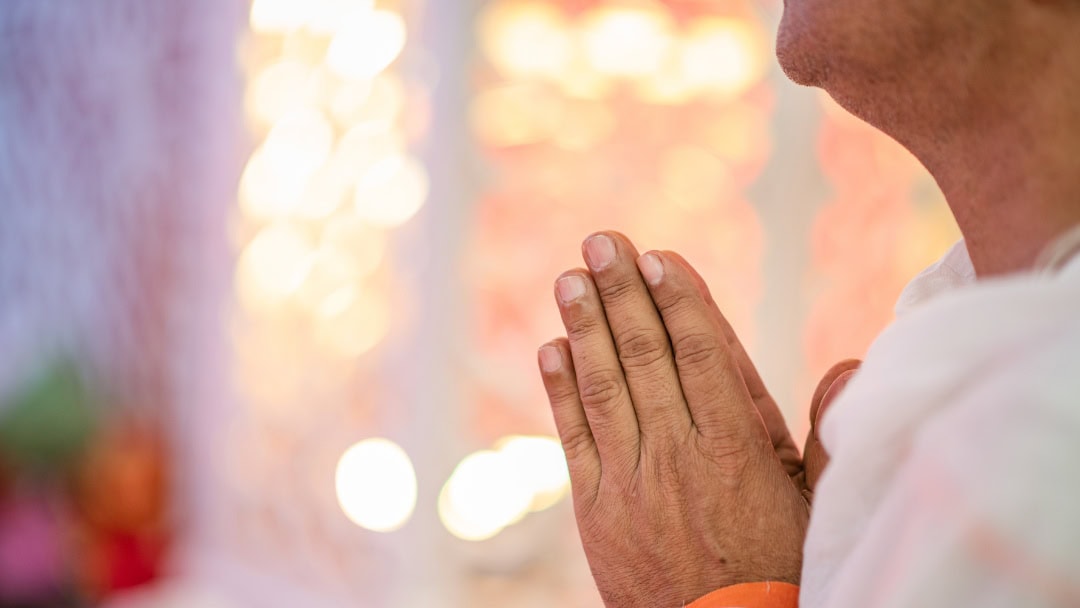
What Is Prayer?
For most of us, prayer has a very personal meaning and significance that may depend upon our religion, cultural or spiritual traditions and practices. Prayer is a spiritual practice found in most cultures of all ages. For some, “conversations” with God, Allah, Elohim, a higher power, or the angels, guides and masters all has a purposeful transcendent power in our daily lives.
We may have special intentions, positive thoughts and desires, or special requests for healing and protection. Whatever it may be, prayer has been probably the first form of healing and spiritual practices in the human culture since the beginning of humankind.
How Can Prayer Help My Child?
Prayer can uplift and support healing on a global level, addressing the whole person mind, body, and spirit. Most children can easily learn how to use prayers, intentions, and positive thoughts. Children can find a sense of peace, control, and clarity when they use this tool to express themselves. They can be individualized to assist a child of any age or ability. Prayer is important for parents and family members to join in the creative process for not only the child, but for themselves.
What Types of Prayers Are There?
- Intercessory prayer: Praying for someone else
- Distant healing prayer: Praying for the healing of someone or something at a distance
- Petition prayer: Asking God or a higher power for something or some intention
- Centering prayer: Centering on a word or phrase for a minimum of 20 minutes in silence, usually in order to open to the sacred
- Contemplative prayer: Opening to union with God or the sacred
- Meditation: Often times differ somewhat by religion. In Christianity, the goal of meditation is often union with God. In Buddhism, the goal is to expand awareness and gain insight into the nature of passing phenomenon. Mediation may be practiced by sitting in silence, often while following one’s breath, doing intentional movement, or using visualization, imagination, or a specific object or mantra as a focus.
How to Teach Children about Prayer
When children are little, standard religious prayers or personal intentions are always an easy way to have children understand the importance of understanding that there is a higher being beyond ourselves. Children respond well to asking for guidance, forgiveness, healing and being appreciative and thankful of our many gifts and blessings during their prayers.
However, teenagers will most likely not be very interested in child-like prayers. They usually like to throw the baby out with the bath water and rebel against their traditional and cultural upbringing. Institutional churches and religions might represent corruption, greed and power for many teens, so prayer may be more attractive to them in another form. Prayer can also be action such as acts of kindness, social justice activism or meditation. Prayer in this form may be the only spiritual connection for teenagers during these very tumultuous and trying years.
What’s Important about Prayer?
Spiritual prayer beyond the physical realm is an important realization for all of us. The concept that “things happen” in our lives and we can’t always blame God, the church or whoever, is the perfect reason to have prayer in our lives. Teaching children of all ages that life happens and prayer can help us overcome the obstacles and difficulties and gives us a higher insight to understand that all things are purposeful with meaning even though we might not understand this concept in the moment. Children, as all of us, need some form of spiritual prayer and meditation in their lives to help them cope and have hope as they live through each day with everyday trials and tribulations.
About Teresa Badillo
In the 1980s she worked overseas in Rome, Italy at the Japanese Embassy in the office of the United Nations (FAO) as a speech writer. She also began her long journey in alternative healing while living in Rome.
After moving to New York and while raising her family of seven children, Teresa embarked on a mission to find alternative non-invasive biomedical, therapeutic, sensory and educational solutions for autism after the diagnosis of her son in the early 1990s.
She won a court case in 1995 against the Rockland County School District in New York to enable ARC Prime Time for Kids to be the first school using Applied Behavioral Analysis teaching method for autism that was paid for by the Rockland County School District. The following year she was instrumental in getting the New York Minister of Education to approve an extension of the ARC license from 5 to 21 years.
She has worked over the years in a number of alternative medical practices with doctors and practitioners organizing various biomedical intervention options for children with autism. Since the mid 1990s, Teresa has served on several boards:
- Foundation for Children with Developmental Disabilities
- The Autoimmunity Project
- Developmental Delayed Resources
- Epidemic Answers
She continues to consult and advise parents on all different areas of autism especially nutritional protocols. Since 2006 she has worked with NutraOrgana, LLC and BioCellular Analysis Testing. She currently researches, writes the newsletter and blogs Teresa’s Corner for The Autism Exchange (AEX). She also writes blog posts and pages for Documenting Hope.
Still Looking for Answers?
Visit the Documenting Hope Practitioner Directory to find a practitioner near you.
Join us inside our online membership community for parents, Healing Together, where you’ll find even more healing resources, expert guidance, and a community to support you every step of your child’s healing journey.
Sources & References
Anderson, J.W., et al. Private prayer associations with depression, anxiety and other health conditions: an analytical review of clinical studies. Postgrad Med. 2016 Sep;128(7):635-41.
Boelens, P.A., et al. A randomized trial of the effect of prayer on depression and anxiety. Int J Psychiatry Med. 2009;39(4):377-92.
Jacobson, K., et al. Prayer for Pain and Anxiety in a Primary Care Setting: A Randomized Controlled Trial. Ann Fam Med. 2026 May 26;24(3):192-197.
Matthews, D.A., et al. Effects of intercessory prayer on patients with rheumatoid arthritis. South Med J. 2000 Dec;93(12):1177-86.
O'Laoire, S. An experimental study of the effects of distant, intercessory prayer on self-esteem, anxiety, and depression. Altern Ther Health Med. 1997 Nov;3(6):38-53.