
Does Your Child Have Anxiety or Nervous-System Dysregulation?
If your child has any of the following symptoms, they likely have a dysregulated nervous system:
- Difficulty focusing
- Hyperactivity or hypervigilance
- Sleep challenges
- Forgetfulness or brain fog
- Sensory overload
- Inability to overcome chronic infections
- Withdrawal or shutdown
“Am I Safe?”
Before focusing on behavior, skills, academics, therapies, or expectations, it is often helpful to first address nervous-system regulation. When a child’s body feels safe, they are more likely to:
- Learn more easily
- Manage more emotions
- Communicate better
- Recover from illness
- Sleep well consistently
- Grow
- Effectively manage inflammation and infections
- Digest food effectively
- Experience regular bowel movements
- Connect with others
The Body Heals When It Feels Safe
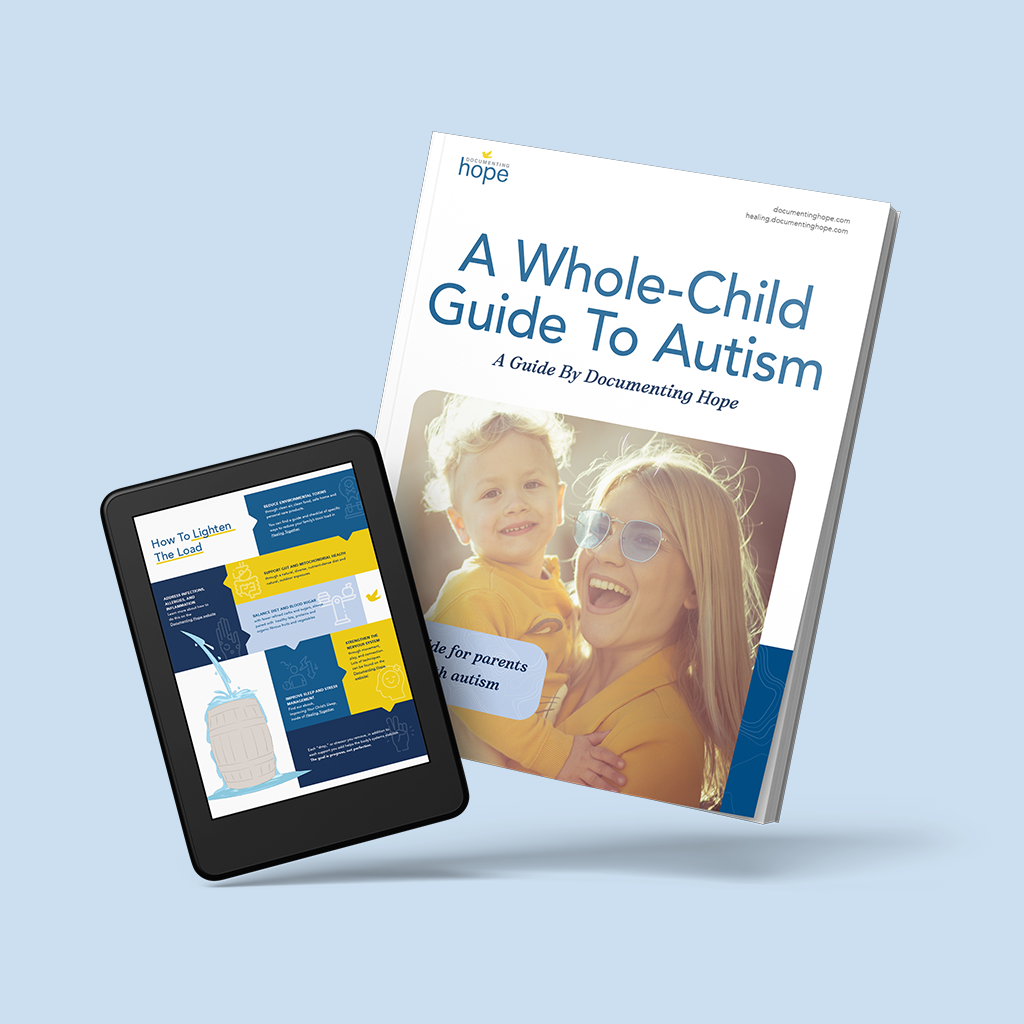
I’ve written a guide to help parents with these challenges because I have come to understand that nervous-system regulation is foundational to healing. The body cannot heal if it is in a state of stress or constant fight-or-flight. The body cannot heal if it doesn’t feel safe.
In this guide, you’ll learn about:
- Simple ways to support co-regulation with your child
- Examples of using breath, the fastest way to calm the nervous system
- Sound and music as medicine
- Supporting the vagus nerve
- Nature: One of the most powerful nervous-system therapies
- Additional tools for parents to work on their own nervous system regulation
- How to build a daily nervous-system regulation practice
- Intensive therapies for systems that are deeply dysregulated or “stuck”
- Experts to follow
- What to do when you feel overwhelmed
Sign up to learn more and help your child heal!
About Beth Lambert
Beth Lambert is a former healthcare consultant and teacher. As a consultant, she worked with pharmaceutical, medical device, diagnostic and other health care companies to evaluate industry trends.
She is the author of A Compromised Generation: The Epidemic of Chronic Illness in America’s Children (Sentient Publications, 2010). She is also a co-author of Documenting Hope's Brain Under Attack: A Resource for Parents and Caregivers of Children with PANS, PANDAS, and Autoimmune Encephalitis. She is a co-author of Reversal of Autism Symptoms among Dizygotic Twins through a Personalized Lifestyle and Environmental Modification Approach: A Case Report and Review of the Literature, J. Pers. Med. 2024, 14(6), 641.

In 2009, Beth founded Documenting Hope and currently serves as Executive Director. Beth attended Oxford University, graduated from Williams College and holds a Masters Degree in American Studies from Fairfield University.
Still Looking for Answers?
Visit the Documenting Hope Practitioner Directory to find a practitioner near you.
Join us inside our online membership community for parents, Healing Together, where you’ll find even more healing resources, expert guidance, and a community to support you every step of your child’s healing journey.
Sources & References
Aggarwal, A., et al. Predominant symptoms in irritable bowel syndrome correlate with specific autonomic nervous system abnormalities. Gastroenterology. 1994 Apr;106(4):945-50.
Altomare, D.F., et al. Slow-transit constipation: solitary symptom of a systemic gastrointestinal disease. Dis Colon Rectum. 1999 Feb;42(2):231-40.
Browning, K.N. et al. Central nervous system control of gastrointestinal motility and secretion and modulation of gastrointestinal functions. Compr Physiol. 2014 Oct;4(4):1339-68.
Campos, J.O., et al. Cardiac autonomic dysfunction in school age children with overweight and obesity. Nutr Metab Cardiovasc Dis. 2022 Oct;32(10):2410-2417.
Chuang, H.H., et al. Weight Status, Autonomic Function, and Systemic Inflammation in Children with Obstructive Sleep Apnea. Int J Mol Sci. 2024 Aug 16;25(16):8951.
Gitler, A., et al. Harnessing non‑invasive vagal neuromodulation: HRV biofeedback and SSP for cardiovascular and autonomic regulation (Review). Med Int (Lond). 2025 Apr 29;5(4):37.
Gullett, N., et al. Heart rate variability (HRV) as a way to understand associations between the autonomic nervous system (ANS) and affective states: A critical review of the literature. Int J Psychophysiol. 2023 Oct:192:35-42.
Karrow, N.A. Activation of the hypothalamic-pituitary-adrenal axis and autonomic nervous system during inflammation and altered programming of the neuroendocrine-immune axis during fetal and neonatal development: lessons learned from the model inflammagen, lipopolysaccharide. Brain Behav Immun. 2006 Mar;20(2):144-58.
Knowles, C.H., et al. Sensory and autonomic neuropathy in patients with idiopathic slow-transit constipation. Br J Surg. 1999 Jan;86(1):54-60.
Knowles, C.H., et al. Slow transit constipation: a disorder of pelvic autonomic nerves? Dig Dis Sci. 2001 Feb;46(2):389-401.
Liu, L., et al. Diagnosis of colonic dysmotility associated with autonomic dysfunction in patients with chronic refractory constipation. Sci Rep. 2022 Jul 14;12(1):12051.
Mazure, M., et al. Autonomic nervous system activity in constipation-predominant irritable bowel syndrome patients. Med Sci Monit. 2012 Aug;18(8):CR493-499.
Michels, N., et al. Gut microbiome patterns depending on children's psychosocial stress: Reports versus biomarkers. Brain Behav Immun. 2019 Aug:80:751-762.
Mizuno, K., et al. Hydrogen-rich water for improvements of mood, anxiety, and autonomic nerve function in daily life. Med Gas Res. 2018 Jan 22;7(4):247-255.
Perrin, C., et al. Transcutaneous Auricular Vagus Nerve Stimulation during Movement Selectively Activates Motor Circuitry without Additional Cortical or Autonomic Effects. J Neurosci. 2026 Jun 24;46(25):e2251252026.
Porges, S.W., et al. Autonomic regulation of preterm infants is enhanced by Family Nurture Intervention. Dev Psychobiol. 2019 Sep;61(6):942-952.
Porges, S.W. Love: an emergent property of the mammalian autonomic nervous system. Psychoneuroendocrinology. 1998 Nov;23(8):837-61.
Raine, A. Autonomic nervous system factors underlying disinhibited, antisocial, and violent behavior. Biosocial perspectives and treatment implications. Ann N Y Acad Sci. 1996 Sep 20:794:46-59.
Speer, K.E., et al. Lifestyle Modification for Enhancing Autonomic Cardiac Regulation in Children: The Role of Exercise. Children (Basel). 2019 Nov 16;6(11):127.