
What Is Leaky Gut?
Many children with developmental delays, allergies, asthma, autoimmune conditions or other chronic illnesses have what is known colloquially as a “leaky gut,” or intestinal hyperpermeability.
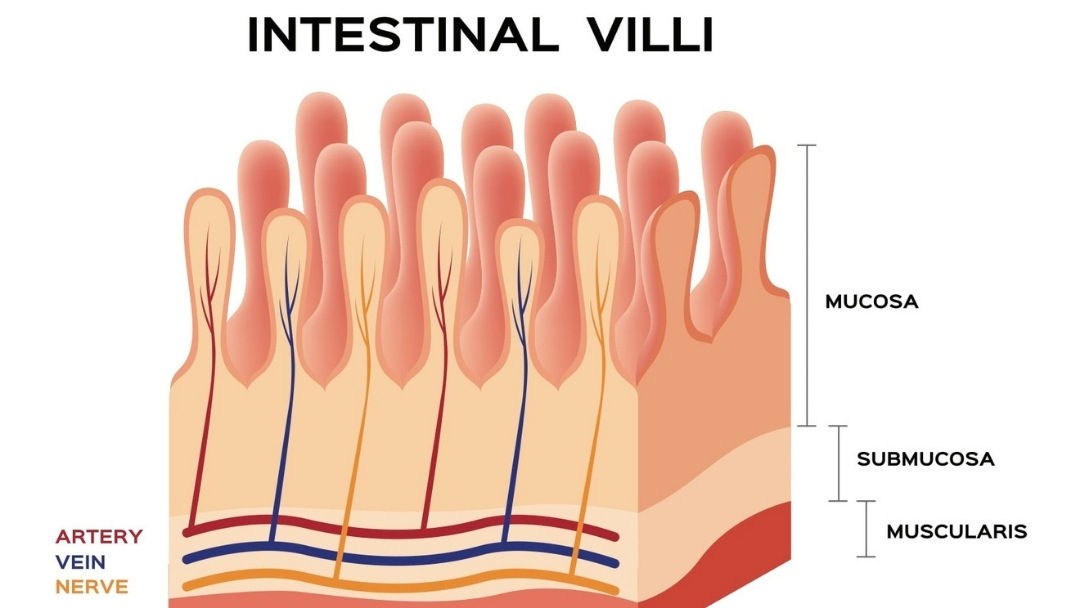
The lining of the digestive system is a selective screen. It allows necessary fuel and nutrients to slip through, or be actively carried across, the intestinal membranes to the blood. Well-functioning membranes filter and excrete undigested food chunks, debris and germs.
What happens when the tissues lining the digestive tract are operating poorly? They “leak.” Microscopic junctures between the cells are too large to prevent undigested food pieces and potentially dangerous chemicals from reaching the blood and circulatory system.
The several pounds of food that the average child consumes each day contain an endless array of toxic substances, organisms and heavy metals. Pathological bacteria, microbes and/or fungi that tend to grow in excess along the surfaces of a leaky gut can change these toxins into even more dangerous compounds.
Fungal/bacterial derivatives, heavy metals and maldigested food can greatly impair a child’s behavior and development. Additionally, inefficient digestion of necessary nutrients can ravage neurological and immunological systems.
Repairing a leaky gut is a four-step process:
Step 1: Eliminate Reactive Foods
When a child’s gut cannot tolerate certain foods, the result can be irritation, chronic inflammation, food sensitivities and intolerances.
Casein (milk-based) and gluten (wheat-based) proteins are two of the most difficult proteins to digest and, therefore, the most allergenic substances in most diets. Milk-protein intolerance is the primary reason for gastrointestinal bleeding in infants, although few older children and adults have this problem. Soy, eggs and corn are the next most common allergens.
How can the gut be repaired if a child continually consumes foods causing debilitating reactions? For a child who reacts negatively to almost everything he eats, the family’s best course is eliminating the most problematic items so that the child’s diet does not become nutritionally at risk. Learn more about an elimination diet here.
Step 2: Add Extra Nutrients
Normal gut repair is nutrient intensive, as the outer lining is totally replaced every 72 hours. The high activity level causes constant cell loss and replacement. With insufficient nutrients, cell turnover is slower and inefficient.
When the gut leaks, unwanted substances are absorbed while some good nutrients are lost (or eaten by fungi and bacteria). Just as home maintenance requires lots of money, gut repair requires the availability of a broad range of nutrients.
Vitamin A, zinc, healing fats, and protein are all critical for cell integrity, are some of the many nutrients that children can take as supplements. These nutrients are important in many ways. Poor absorption of just one nutrient, fat-soluble vitamin A, makes some children especially susceptible to having leaky gut.
Step 3: Restore Intestinal Microbial Balance
Antibiotics contribute to leaky gut by killing beneficial bacteria that are a first-line defense against invading organisms. These “good” bacteria aid in gut repair by converting certain fibers in the diet into short-chain fatty acids such as butyric acid. This fatty acid works as a biological mortar to strengthening the connections between colon cells and reinforcing the gut lining. It acts as the primary energy source for epithelial cells in the colon and fuels the repair, integrity, and maintenance of the intestinal barrier. Thus, the discontinuation of antibiotics, with your practitioner’s guidance, will likely be necessary to improve a leaky gut.
In addition, fungus and other “bad” microbes thrive in an unhealthy gut environment. Once they are living happily, they are not easily removed. A gut-healing diet can help to restore intestinal microbial balance by feeding beneficial organisms and crowding out pathogenic ones.
To determine and monitor the need and efficacy of undertaking such a diet, consider:
- A urinary organic acid test to measure fungal or bacterial by-products
- A comprehensive digestive stool analysis (CDSA) with parasitology test
Your healthcare practitioner can request these tests and help with any additional treatment options.
Step 4: Take Additional Steps to Heal the Gut
Read our article here on healing the gut to learn about additional actions you can take to heal a leaky gut. You can also read this article about healing diets and foods.
In Summary
The gut and the brain are connected. Therefore, repairing a leaky gut can improve the function of the brain and nervous system. The better food is broken down and absorbed, the fewer problems for the brain and the body.
About Teresa Badillo
In the 1980s she worked overseas in Rome, Italy at the Japanese Embassy in the office of the United Nations (FAO) as a speech writer. She also began her long journey in alternative healing while living in Rome.
After moving to New York and while raising her family of seven children, Teresa embarked on a mission to find alternative non-invasive biomedical, therapeutic, sensory and educational solutions for autism after the diagnosis of her son in the early 1990s.

She won a court case in 1995 against the Rockland County School District in New York to enable ARC Prime Time for Kids to be the first school using Applied Behavioral Analysis teaching method for autism that was paid for by the Rockland County School District. The following year she was instrumental in getting the New York Minister of Education to approve an extension of the ARC license from 5 to 21 years.
She has worked over the years in a number of alternative medical practices with doctors and practitioners organizing various biomedical intervention options for children with autism. Since the mid 1990s, Teresa has served on several boards:
- Foundation for Children with Developmental Disabilities
- The Autoimmunity Project
- Developmental Delayed Resources
- Epidemic Answers
She continues to consult and advise parents on all different areas of autism especially nutritional protocols. Since 2006 she has worked with NutraOrgana, LLC and BioCellular Analysis Testing. She currently researches, writes the newsletter and blogs Teresa’s Corner for The Autism Exchange (AEX). She also writes blog posts and pages for Documenting Hope.
Still Looking for Answers?
Visit the Documenting Hope Practitioner Directory to find a practitioner near you.
Join us inside our online membership community for parents, Healing Together, where you’ll find even more healing resources, expert guidance, and a community to support you every step of your child’s healing journey.
Sources & References
Liu, Z., et al. Tight junctions, leaky intestines, and pediatric diseases. Acta Paediatricia. 94 (2005): 386-393.
McCullough, F.S., et al. The effect of vitamin A on epithelial integrity. Proc Nutr Soc. 1999 May;58(2):289-93.
Michielan, A., et al. Intestinal Permeability in Inflammatory Bowel Disease: Pathogenesis, Clinical Evaluation, and Therapy of Leaky Gut. Mediators Inflamm. 2015:628157.
Mine, Y., et al. Surfactants Enhance the Tight-Junction Permeability of Food Allergens in Human Intestinal Epithelial Caco-2 Cells. International Archives of Allergy and Immunology. 2003 Feb;130(2):135-42.
Moser, L.A. Astrovirus Increases Epithelial Barrier Permeability Independently of Viral Replication. Journal of Virology. 2007 Nov;81(21):11937-45.
Smale, S., et al. Determining small bowel integrity following drug treatment. British Journal of Clinical Pharmacology. 2003 Sep;56(3):284-91.