What Is Asthma?
Asthma is a chronic respiratory condition that inflames and narrows the airways, making it difficult for a child to breathe. It can cause shortness of breath and reoccurring periods of a high-pitched whistling sound as the child breathes, known as wheezing. Coughing usually accompanies the breathing difficulties at night or in the early morning.
An asthma attack can be triggered by an allergic reaction or some other form of sensitivity to allergens such as pollen, dry leaves, cats, smoke, air pollution, grass, dust mites, mold and burning wood. Today, asthma is one of the most common long-term respiratory conditions found among children.
What Your Doctor May Tell You About Asthma
Your pediatrician may tell you that your child has had many of the risk factors for developing asthma such as:
- Eczema
- Low birth weight
- Caesarean section
- Antibiotic usage by mother before or during pregnancy
- Antibiotic usage by child
- Tylenol usage
- Not being breastfed as an infant
- Frequent respiratory infections
- Familial history of autoimmune diseases, allergies and asthma, especially on the mother’s side
- Second-hand smoke
- Poor hygiene
- Allergies
Mainstream Medical Treatment of Asthma
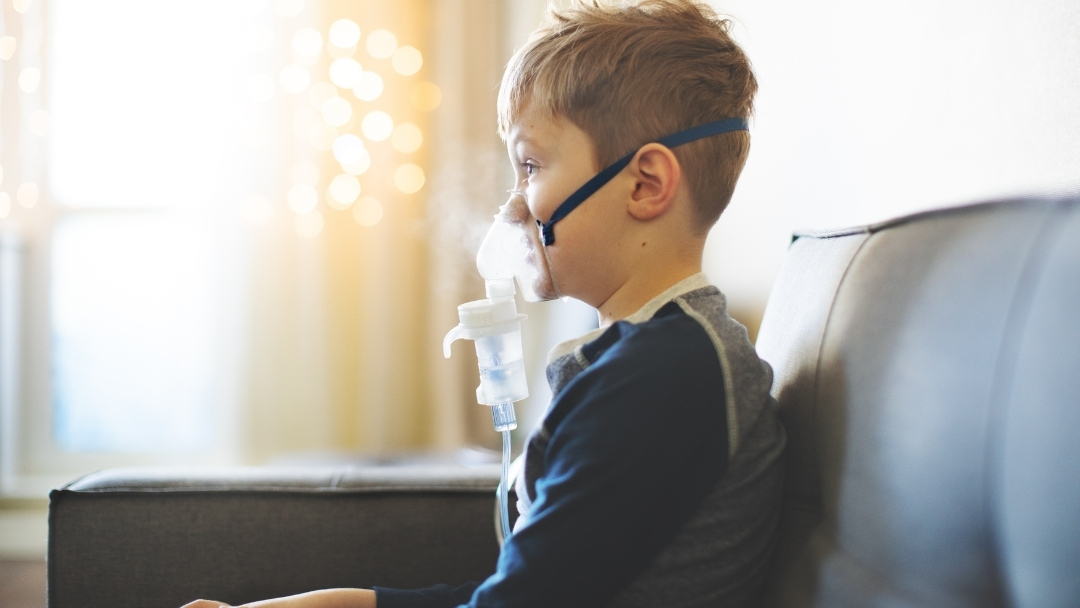
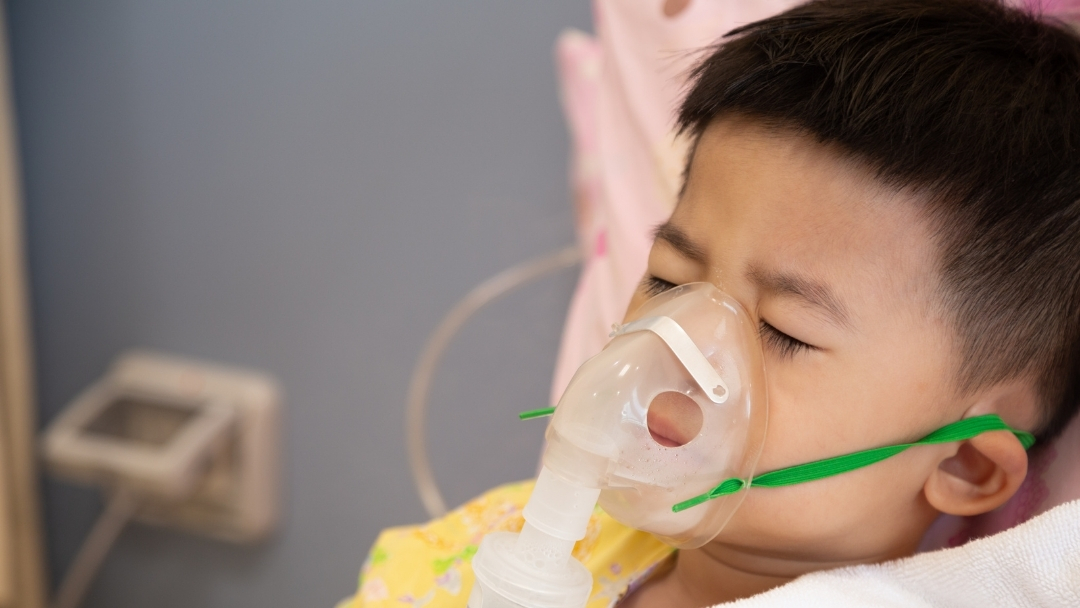
Your child may be given an inhaler with steroid medication for long-term control, prevention and management of acute asthma attacks. An inhaler is a device with a holding chamber to ensure that the medication reaches the lungs. Alternatively, your child may be given a nebulizer which is a machine that includes compressor tubing and a mask to deliver the medication. These steroid medications can stunt a child’s growth and are also addictive with devastating side effects from long-term usage, but your child’s pediatrician may tell you this outweighs the risk of not being able to breathe.
If medications are unable to help your child, your pediatrician may suggest seeing a specialist such as an allergist or immunologist. The allergist may administer allergy shots (immunotherapy) to help with the allergies triggering the asthma attacks.
In certain cases, your child’s doctor may suggest having an adenotonsillectomy, which is the surgical remove of the child’s adenoids and tonsils. Pediatricians may tell you that this procedure in most cases can eventually stop asthma completely.
Another Way to Think About Asthma
Asthma is an indication that the immune system is compromised and that there are underlying imbalances that have resulted in inflammation in the bronchial tubes that need to be identified and addressed.
The “Atopic March”
Eczema, allergies and asthma are known as the “atopic march” or “atopic triad” because they are so commonly seen together. Up to 76% of children with severe eczema as children will go on to develop asthma.
Steroids Can Drive the Disease Process Deeper
Eczema often leads to the development of asthma if it is treated with a steroid (cortisone) cream. Steroids suppress the immune system, thus driving the disease process deeper. Skin is the body’s largest organ and typically the first organ to visually serve as an indicator that something is wrong with the body on the inside. It is also the body’s largest organ of detoxification. If the body’s immune system is told by steroids not to use the skin as an organ of elimination, it will resort to the next available organs, the lungs.
Asthma Healing Checklist
Regulate the Nervous System
Nervous-system dysregulation is a common root cause of asthma. This dysregulation can come about from a variety of stressors, but birth trauma is a very common cause. Remember that the body cannot heal if it is in a state of stress, so learn about the many ways to destress the body, whether it’s through structural therapies such as neurologic chiropractic care, mind-body-spirit therapies, neurodevelopmental therapies, or strategies to boost vagal tone such as breathwork. Craniosacral therapy, acupunture and breathwork are notable for their accessibility, ease of use with children, and success in reducing stress and anxiety that can contribute to asthma.
Eliminate Dairy from the Diet
Dairy can be one of the biggest culprits of asthma because it is a common food sensitivity, which is a different kind of immune reaction than an outright allergy. Mainstream allergists only check for anaphylactic (IgE) allergies, not sensitivities or intolerances.
In Traditional Chinese Medicine (TCM), dairy is eliminated for asthma because it is classified as a phlegm-producing food that generates dampness and congestion in the lungs. Dairy also chills and weakens the spleen, which then fails to process fluids properly, leading to mucus accumulation. A TCM practitioner would likely recommend avoiding dairy while instead eating warm, cooked, and moistening foods such as pears and soups to support lung health and clear phlegm.
Check for Other Food Sensitivities
There could also be other foods that trigger asthma attacks such as gluten, eggs and others. An elimination diet can help you determine if any common foods could be contributing to the inflammation and immune dysregulation underlying asthma. It’s best to keep a food journal to detect which, if any, foods your child is sensitive to, as sometimes it can take two to three days for asthma or other unusual symptoms such as headache, constipation, lack of focus, irritability or unusual behaviors to appear.
Use Allergy-Elimination Techniques
Allergy-elimination techniques such as BioSET (Bio-energetic Sensitivity and Enzyme Therapy), NAET (Nambudripad’s Allergy Elimination Technique), the Ellen Cutler method, Low-Dose Allergen (LDA) therapy, and ART (Allergy Release Technique) can all help with the lowering or elimination of symptoms associated with asthma. Even acupuncture, acupressure and certain digestive enzymes can help.
Correct Cell-Membrane Composition
Daniela Lawler explained in one of our expert interviews that a dysregulated cell membrane can be the missing piece in healing chronic health conditions. Dysfunctional membrane composition can prevent proper cellular signaling and resolution of infections or inflammation. After addressing cell-membrane health through lipid replacement and foundational factors, she has observed that chronic health conditions, even mold sensitivity, can sometimes resolve without direct treatment, suggesting that the root problem is often cell-membrane instability and an inability to cope with insults.
Heal the Gut
A gut-healing diet such as the GAPS diet, Body Ecology Diet, Specific Carbohydrate Diet and the Paleo/primal diet can help to rebalance the gut dysbiosis that is common in children with asthma. These diets typically remove the preferred food of gut pathogens while providing prebiotic and probiotic foods to helpful gut microbes. We recommend following one of these specialty diets for at least six months and keeping a food journal to see if any positive or negative changes occur for your child. You can also read our page on healing the gut here.
Check Vitamin D Status
Low vitamin D levels are significantly correlated with asthma, particularly regarding disease severity, control, and exacerbation risk. Supplementation with vitamin D might or might not improve asthma episodes, though, as it is but one factor of the total load of factors that contribute to the immune dysregulation underlying asthma.
Give Epsom Salt Foot Baths
Both magnesium and sulfur supplementation can be used to help with symptoms of asthma; see Sources & References below. Epsom salts are chemically known as magnesium sulfate heptahydrate, meaning that they contain both magnesium and sulfur. Magnesium can relax the airways, while sulfur can assist with detoxification of the liver.
Check for Mold
Mold exposure is associated with an increased risk of developing or worsening asthma. Keep in mind that exposure could be happening at home or at your child’s school. One of the best indicators that mold may be a problem for your child is if symptoms improve while away from the home or school for more than a few days. We have extensive resources on our website about how to test for mold in the home or school, which you can find here, and how to test if there is reactivity by your child’s body, which you can find here.
In our experience, if healing of a chronic health condition has stalled or plateaued, there is usually a hidden mold problem in the home or school. In addition, as stated above, cell-membrane dysregulation could be an underlying factor to mold sensitivity.
Detoxify the Body
Asthma is a signal by the body that it needs help with detoxification. There are gentle ways to help a child’s body detoxify, such as Epsom salts baths (mentioned above), sweating, and eating cruciferous vegetables such as broccoli and cauliflower. You can learn more about these and other methods here. In addition, practitioners such as homotoxicologists and naturopaths can provide additional tools for detoxificaiton.
Avoid Acetaminophen
The use of acetaminophen (also known as Tylenol and paracetemol) is associated with asthma in children, primarily because it depletes the body of glutathione, an important antioxidant. This can lead to oxidative stress and airway inflammation, potentially triggering asthma symptoms or exacerbations.
Avoid Antibiotics
Antibiotics contribute to gut dysbiosis, which in turn can drive the immune dysregulation that underlies asthma. If antibiotics are presented as the only option for a condition or situation, consider working with a naturopath, functional-medicine doctor, herbalist, homeopath or Traditional Chinese Medicine practitioner for alternative options.
Avoid Antibacterial Products
Antibacterial soaps, toothpastes, lotions, sprays and other personal-care and home-care products can contribute to gut dysbiosis and immune dysregulation, just as antibiotics do. Instead of being in the mindset of “killing germs”, which is impossible and only leads to more-resistant bacteria such as MRSA (Methicillin-Resistant Staphylococcus Aureus), consider taking a more-balanced approach. Handwashing and other forms of hygiene are fine to do without using antibacterial products.
Avoid Harsh Chemicals and Synthetic Fragrances
Not only are harsh household chemicals such as chlorine bleach irritating to the lungs, but they can also contribute to the total load of toxicity in your child’s body. In addition, synthetic fragrances such as the ones found in dryer sheets, fabric softeners, detergents, lotions, soaps and perfumes are known to trigger or worsen asthma in a large subset of asthmatics. Even natural essential oils can trigger asthma attacks, so avoid them as well. Learn about ways you can support your family’s health by checking out our greening your home and life resources.
Watch and Read Other Parents’ Success Stories
We have been documenting the success of parents helping their children heal from chronic health conditions for quite a while. We have quite a few that we’ve collected about children healing from asthma. Watching and reading their stories may give you inspiration for your own child’s healing journey:
See a Homeopath
Homeopathy is a gentle way to induce healing reactions in the body. Consult a homeopath to see if any of the following remedies could reduce your child’s asthmatic symptoms.
- Ipecauana
- Antimonium tartaricum
- Arsenicum album
- Phosphorous
Consider using Schueller’s cell salts which can be effective as well. Sequential homeopathy can also very effective for asthma.
Your child’s homeopath might use lobelia — Indian tobacco (Lobelia inflate) — for an acute asthmatic attack. Three parts tincture of lobelia are mixed with one part tincture of capsicum (red pepper or cayenne pepper). Twenty drops of the mixture in water are typically given at the start of an asthmatic attack. This process is then repeated every thirty minutes for a total of three or four doses.
Other Items to Consider
Please review the lists in the blue box below to see if there are other diet, lifestyle and therapies to consider. Click on the small white circles at the bottom of the box to advance to the next subject.
About Maria Rickert Hong CHHC
Maria Rickert Hong is a Co-Founder of, and the Education and Media Director for, Documenting Hope.
She is a former sell-side Wall Street equity research analyst who covered the oil services sector at Salomon Smith Barney and Lehman Brothers under Institutional Investor #1 ranked analysts.
Later, she covered the gaming, lodging & leisure sector at Jefferies & Co. and Calyon Securities. She quit working on Wall Street when her first son was born.

Prior to working on Wall Street, she was a marketing specialist for Halliburton in New Orleans, where she also received her MBA in Finance & Strategy from Tulane University.
She is the author of the bestselling book Almost Autism: Recovering Children from Sensory Processing Disorder and the co-author of Brain Under Attack: A Resource for Parents and Caregivers of Children with PANS, PANDAS, and Autoimmune Encephalitis. She is a co-author of Reversal of Autism Symptoms among Dizygotic Twins through a Personalized Lifestyle and Environmental Modification Approach: A Case Report and Review of the Literature, J. Pers. Med. 2024, 14(6), 641.
Maria is also a Certified Holistic Health Counselor. Her work can be found on DocumentingHope.com, Healing.DocumentingHope.com, Conference.DocumentingHope.com and MariaRickertHong.com
Still Looking for Answers?
Visit the Documenting Hope Practitioner Directory to find a practitioner near you.
Join us inside our online membership community for parents, Healing Together, where you’ll find even more healing resources, expert guidance, and a community to support you every step of your child’s healing journey.
Sources & References
Al Biltagi, M., et al. Omega-3 fatty acids, vitamin C and Zn supplementation in asthmatic children: a randomized self-controlled study. Acta Paediatr. 2009 Apr;98(4):737-42.
American Lung Association. The Impact of Asthma. Accessed 2 Sep 2020.
Azad, Meghan B., et al. Perinatal Programming of Asthma: The Role of Gut Microbiota. Clin Dev Immunol. 2012; 2012: 932072.
Beasley, R.W., et al. Acetaminophen use and risk of asthma, rhinoconjunctivitis, and eczema in adolescents: International Study of Asthma and Allergies in Childhood Phase Three. Am J Respir Crit Care Med. 2011 Jan 15;183(2):171-8.
Brown, S.D., et al. Airway TGFbeta1 and oxidant stress in children with severe asthma: association with airflow limitation. Allergy Clin Immunol. 2012;129(2):388-96, 96 e1-8.
Bunyavanich, S., et al. Systems biology of asthma and allergic diseases: a multiscale approach. J Allergy Clin Immunol. 2015;135(1):31-42.
Chauhan, B.F., et al. Intermittent versus daily inhaled corticosteroids for persistent asthma in children and adults. Cochrane Database Syst Rev. 2013;2:CD009611.
Checkley, W., et al. 25-hydroxy vitamin D levels are associated with childhood asthma in a population-based study in Peru. Clin Exp Allergy. 2015 Jan;45(1):273–82.
Cortese, S., et al. Association between attention deficit hyperactivity disorder and asthma: a systematic review and meta-analysis and a Swedish population-based study. Lancet Psychiatry. 2018 Sep;5(9):717-726.
D’Auria, E., et al. Omega-3 fatty acids and asthma in children. Allergy Asthma Proc. 2014;35(3):233-40.
Della Giustina, A., et al. Vitamin D, allergies and asthma: focus on pediatric patients. World Allergy Organ J. 2014;7(1):27.
Desai, J.R., et al. Diabetes and asthma case identification, validation, and representativeness when using electronic health data to construct registries for comparative effectiveness and epidemiologic research. Med Care. 2012;50 Suppl:S30-5.
Fabian E., et al. Nutritional supplements and plasma antioxidants in childhood asthma. Wien Klin Wochenschr. 2013;125(11-12):309-15.
Frieri, M. Asthma linked with rhinosinusitis: An extensive review. Allergy Rhinol (Providence). 2014;5(1):41-9.
Guo, C.H., et al. Nutritional supplement therapy improves oxidative stress, immune response, pulmonary function, and quality of life in allergic asthma patients: an open-label pilot study. Altern Med Rev. 2012;17(1):42-56.
Hansel, T.T., et al. Microbes and mucosal immune responses in asthma. Lancet. 2013;381(9869):861-73.
Hegner, R., et al. The asthma epidemic: prospects for controlling an escalating public health crisis: a background paper. Washington, D.C.: National Health Policy Forum; 2000. 16 p.p.
Hijazi, N., et al. Diet and childhood asthma in a society in transition: A study in urban and rural Saudi Arabia. Thorax. 2000 Sep;55(9):775-9.
Hoskin-Parr, L., et al. Antibiotic exposure in the first two years of life and development of asthma and other allergic diseases by 7.5 yr: A dose-dependent relationship. Pediatr Allergy Immunol. 2013 Dec; 24(8): 762–771.
Jolliffe, D.A., et al. “Vitamin D supplementation to prevent asthma exacerbations: a systematic review and meta-analysis of individual participant data.” Lancet Respir Med. 2017 Nov;5(11):881-890.
Kreiner-Møller, E., et al. Infant acetaminophen use associates with early asthmatic symptoms independently of respiratory tract infections: the Copenhagen Prospective Study on Asthma in Childhood 2000 (COPSAC(2000)) cohort. J Allergy Clin Immunol. 2012 Dec;130(6):1434-6.
Lang, J.E., et al. Role of biomarkers in understanding and treating children with asthma: towards personalized care. Pharmgenomics Pers Med. 2013;6:73-84.
Lessa, N., et al. Asthma and suicide-related adverse events: a review of observational studies. Eur Respir Rev. 2011;20(122):287-92.
Litonjua, A.A. Childhood asthma may be a consequence of vitamin D deficiency. Curr Opin Allergy Clin Immunol. 2009;9(3):202-7.
Ly, N.P., et al. Gut microbiota, probiotics, and vitamin D: interrelated exposures influencing allergy, asthma, and obesity? J Allergy Clin Immunol. 2011;127(5):1087-94; quiz 95-6.
Mabalirajan, U., et al. Effects of vitamin E on mitochondrial and asthma features in an experimental allergic murine model. J Appl Physiol. 2009 Oct;107(4):1285-92.
Martineau, A.R., et al. Vitamin D for the management of asthma. Cochrane Library, 2016 DOI: 10.1002/14651858.CD011511.pub2.
McCloud, E., et al. A medical nutrition therapy primer for childhood asthma: current and emerging perspectives. J Am Diet Assoc. 2011 Jul;111(7):1052–64.
McCormack, et al. Indoor particulate matter increases asthma morbidity in children with non-atopic and atopic asthma. Ann Allergy Asthma Immunol. 2011;106(4):308-15.
Norton, R.L., et al. Selenium and asthma. Mol Aspects Med. 2012;33(1):98-106.
Orivuori, L., et al. High level of fecal calprotectin at age 2 months as a marker of intestinal inflammation predicts atopic dermatitis and asthma by age 6. Clin Exp Allergy. 2015.
Peters, R.L., et al. Infant food allergy phenotypes and association with lung function deficits and asthma at age 6 years: a population-based, prospective cohort study in Australia. Lancet Child Adolesc Health. 2023 Jul 24;S2352-4642(23)00133-5.
Pfeffer, P.E., et al. Vitamin D influences asthmatic pathology through its action on diverse immunological pathways. Ann Am Thorac Soc. 2014;11 Suppl 5:S314-21.
Propp, P., Becker, A. Prevention of asthma: where are we in the 21st century? Expert Rev Clin Immunol. 2013;9(12):1267-78.
Schwalfenberg, G.K. The Importance of Magnesium in Clinical Healthcare. Scientifica (Cairo). 2017:2017:4179326.
Searing, D.A., et al. Decreased serum vitamin D levels in children with asthma are associated with increased corticosteroid use. J Allergy Clin Immunol. 2010;125(5):995-1000.
Tollånes, M.C., et al. Cesarean section and risk of severe childhood asthma: a population-based cohort study. J Pediatr. 2008 Jul;153(1):112-6.
Vael, C., et al. Early intestinal Bacteroides fragilis colonization and development of asthma. BMC Pulmonary Medicine. 2008 Sep 26;8:19.
Wlasiuk, G., et al. The farm effect, or: when, what and how a farming environment protects from asthma and allergic disease. Curr Opin Allergy Clin Immunol. 2012;12(5):461-6